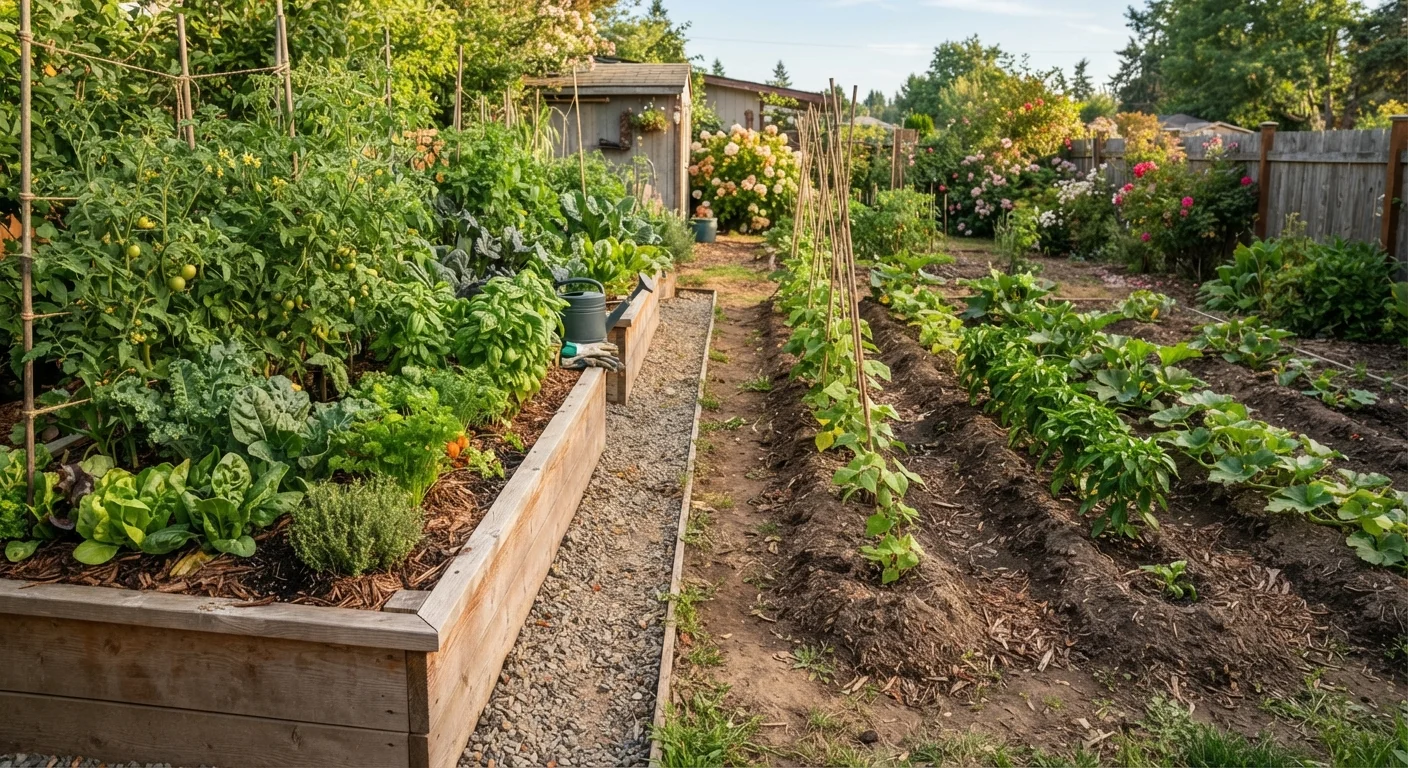
The Core Trade-Off: Control vs. Cost
The central tension between raised beds and in-ground gardening comes down to how much control you want over your growing environment - and how much you're willing to spend to get it. Raised beds let you build the ideal growing medium from scratch: you choose the soil mix, the drainage layer, and even the depth. In-ground gardening means working with what the earth gives you, which can be a blessing or a significant challenge depending on where you live.
If you're just getting started with food gardening, our vegetable garden setup guide walks through site selection, soil prep, and crop choices before you commit to either method.
Start Small to Test Your Conditions
Before committing to building multiple raised beds or tilling a large in-ground plot, try a small version of each if your yard allows. One 4×8 raised bed alongside a modest in-ground row will reveal soil drainage patterns, sun exposure, and your own preference for maintenance tasks far better than any planning exercise. Data from your own yard is always more reliable than generalizations.
Drainage, Soil Quality, and Root Health
Raised beds drain more reliably than in-ground plots, which matters most in clay-heavy or poorly draining yards. Sitting above grade, raised beds shed excess water rather than pooling it around roots. They also warm up faster in spring, which can give cool-season crops a modest head start.
In-ground planting, however, tends to retain moisture longer - an advantage during dry spells, especially in sandy soils where raised beds may dry out too quickly. Native soil also contains an established microbial ecosystem that supports plant health in ways that bagged growing mixes sometimes don't replicate immediately.
Whichever method you use, mulching is a key habit. See our guide on proper mulching technique to protect soil moisture and suppress weeds effectively.
| Raised Beds | In-Ground Planting | |
|---|---|---|
| Startup Cost | Moderate to high (materials + soil) | Low (tools and amendments only) |
| Soil Control | Full - you build the mix | Limited by native soil quality |
| Drainage | Excellent, especially on flat or clay sites | Varies - poor in clay or low-lying areas |
| Weed Pressure | Lower initially, manageable over time | Higher, requires consistent effort |
| Scalability | Moderate - adding beds has incremental cost | High - expand rows with minimal expense |
| Accessibility | Good - height reduces bending | Requires bending and kneeling at ground level |
| Moisture Retention | Dries out faster; needs consistent watering | Retains moisture longer; less watering in dry spells |
Weed Pressure and Maintenance
Raised beds typically have fewer weed problems at the outset because you're filling them with purchased or amended soil rather than ground that's loaded with weed seeds. Over time, though, wind-blown seeds colonize any open bed. A landscape fabric barrier at the base can help, though it's not foolproof.
In-ground plots require more consistent weed management, particularly in the first few seasons. The trade-off is that established in-ground gardens often develop denser canopies from larger plantings, which naturally shade out some weeds. For non-chemical weed management strategies that work in both settings, see evidence-based weed control methods.
Know What's in Your Soil Before Going In-Ground
If your home was built before 1978 or sits near industrial sites, old roadways, or painted structures, have your native soil tested for lead and other contaminants before planting edibles in-ground. Many cooperative extension services offer low-cost or subsidized soil testing. Raised beds filled with clean growing medium are the safer default in contaminated-soil situations.
Cost, Materials, and Long-Term Investment
In-ground gardening has a lower entry cost - basic tools, seeds or transplants, and some soil amendment are often all you need. Raised beds carry upfront costs for framing material, hardware, and enough quality soil to fill the bed, which can be substantial for larger or taller structures.
Frame material choice also affects durability and ongoing cost. Wood is common, but rot resistance varies significantly. Our comparison of pressure-treated lumber vs. cedar covers what to consider before you build. Over a 5-10 year horizon, well-built raised beds can be cost-competitive because they tend to produce reliably with less soil amendment each year - especially if you're feeding them with home compost. Learn more about building that supply with our home composting guide.