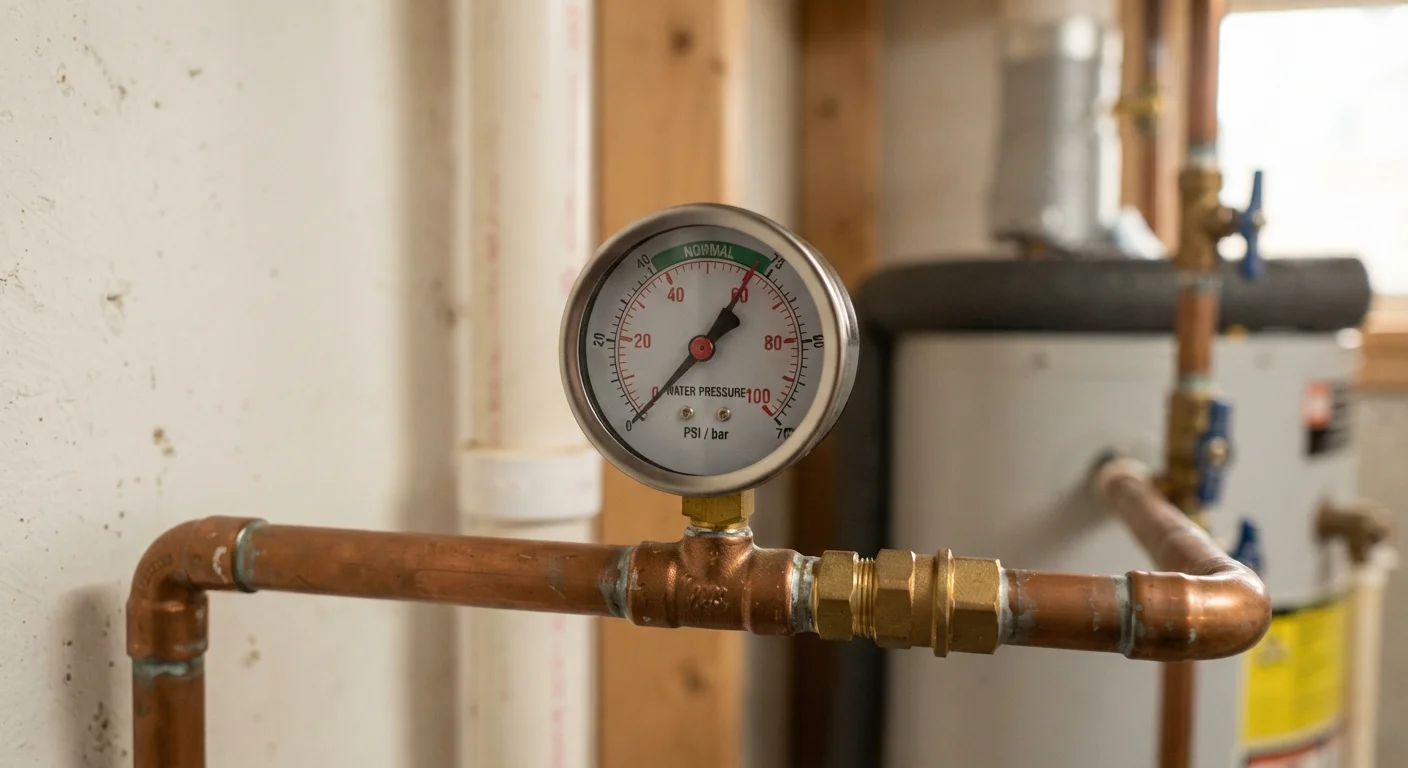
The PSI Scale: What Each Range Actually Tells You
Think of PSI as a health indicator for your plumbing system. Grab a threaded pressure gauge (available at any hardware store for a few dollars), screw it onto an outdoor hose bib with all water use stopped, and you will have your baseline in seconds.
- Below 40 PSI: Too low. Showers feel weak, toilets take longer to refill, and appliances that rely on minimum inlet pressure - such as dishwashers and washing machines - may operate poorly or throw error codes.
- 40-60 PSI: Acceptable to good. Most fixtures perform well and the system is within manufacturer tolerances for common appliances.
- 60-80 PSI: The upper comfortable range. Flow is strong but not yet stressful on hardware.
- Above 80 PSI: Potentially damaging. Joint stress, seal wear, and water hammer risk increase. Many plumbing codes treat 80 PSI as the upper permissible limit for residential supply.
Just as more does not always mean better when evaluating a technical specification - a theme explored in our guide to misleading specs - higher water pressure is not inherently desirable. The goal is a stable reading within the safe window.
40-80 PSI
Recommended residential water pressure range
This range is cited by the International Plumbing Code and is consistent with appliance manufacturer guidelines for safe inlet pressure.
~60 PSI
Commonly cited ideal household pressure
Many plumbers and plumbing references point to 60 PSI as a practical sweet spot balancing flow performance and hardware longevity.
80 PSI
Upper limit before damage risk increases
Sustained pressure above 80 PSI is associated with accelerated wear on seals, joints, and water-using appliances.
Common Causes of Pressure Problems
Before assuming the worst, work through the most common culprits systematically.
Low Pressure
- Partially closed main shutoff valve: After any repair, the valve may not have been fully reopened. Turn it counterclockwise until it stops.
- Clogged aerators or showerheads: Mineral deposits restrict flow at the fixture. Unscrew the aerator and soak it in white vinegar for a few hours.
- Corroded or undersized pipes: Older galvanized steel pipes narrow over decades of mineral buildup, reducing flow across the whole house.
- PRV failure or misadjustment: The pressure-reducing valve is usually located near where the main line enters the house. A worn PRV can drop pressure below usable levels.
High Pressure
- No PRV installed: Not every home has one, particularly older construction. If municipal supply pressure is high and there is no PRV, your system absorbs it directly.
- PRV set too high: A PRV's set point drifts over time or may have been adjusted by a previous owner. A plumber can recalibrate or replace it.
Test Pressure at Different Times of Day
Municipal supply pressure can vary depending on neighborhood demand - it is often lower in the morning when usage peaks. Test your pressure at two or three different times to see whether you have a steady problem or a demand-driven dip. A consistently low reading at all hours points to a plumbing or PRV issue rather than a supply fluctuation.
If only one area of your home has low pressure, the problem is almost certainly isolated to that branch or fixture. If pressure is low everywhere, trace it upstream toward the meter and PRV.
When to Handle It Yourself - and When to Call a Pro
Some pressure issues are genuinely DIY-friendly. Others require a licensed plumber.
Reasonable DIY tasks
- Checking pressure with a gauge
- Cleaning or replacing faucet aerators and showerhead screens
- Verifying that the main shutoff and individual stop valves are fully open
Leave it to a licensed plumber
- Replacing or recalibrating a PRV
- Diagnosing and repairing corroded or leaking supply lines
- Investigating sudden unexplained pressure changes, which can signal a main-line leak or municipal supply issue
Pressure vs. Flow Rate: Not the Same Thing
Pressure (PSI) measures force; flow rate (GPM - gallons per minute) measures volume delivered. A fixture can have adequate pressure but still deliver poor flow if the supply line is undersized or partially blocked. When a plumber diagnoses your system, they may evaluate both figures independently.
Adequate pressure also matters outside the house. If your sprinkler system sputters or your garden hose feels weak, that is a useful data point - but remember that outdoor flow is affected by how many zones run simultaneously. For broader context on how water delivery affects your landscaping, see our article on how much water your lawn actually needs.