The 1-to-1.5-Inch Rule - And Why It Matters
The most widely cited guideline in turfgrass management is straightforward: lawns need roughly 1 to 1.5 inches of water per week, combining irrigation and rainfall. But that number only makes sense when you understand what it's actually measuring - not volume sprayed, but water absorbed into the root zone.
A light 10-minute sprinkle every evening may feel like enough, but it typically wets only the top inch of soil. Grass roots chase moisture downward, so shallow watering trains them to stay near the surface - where they're vulnerable to heat and drought. Deep, less frequent sessions push moisture 4 to 6 inches down, where it does the most good.
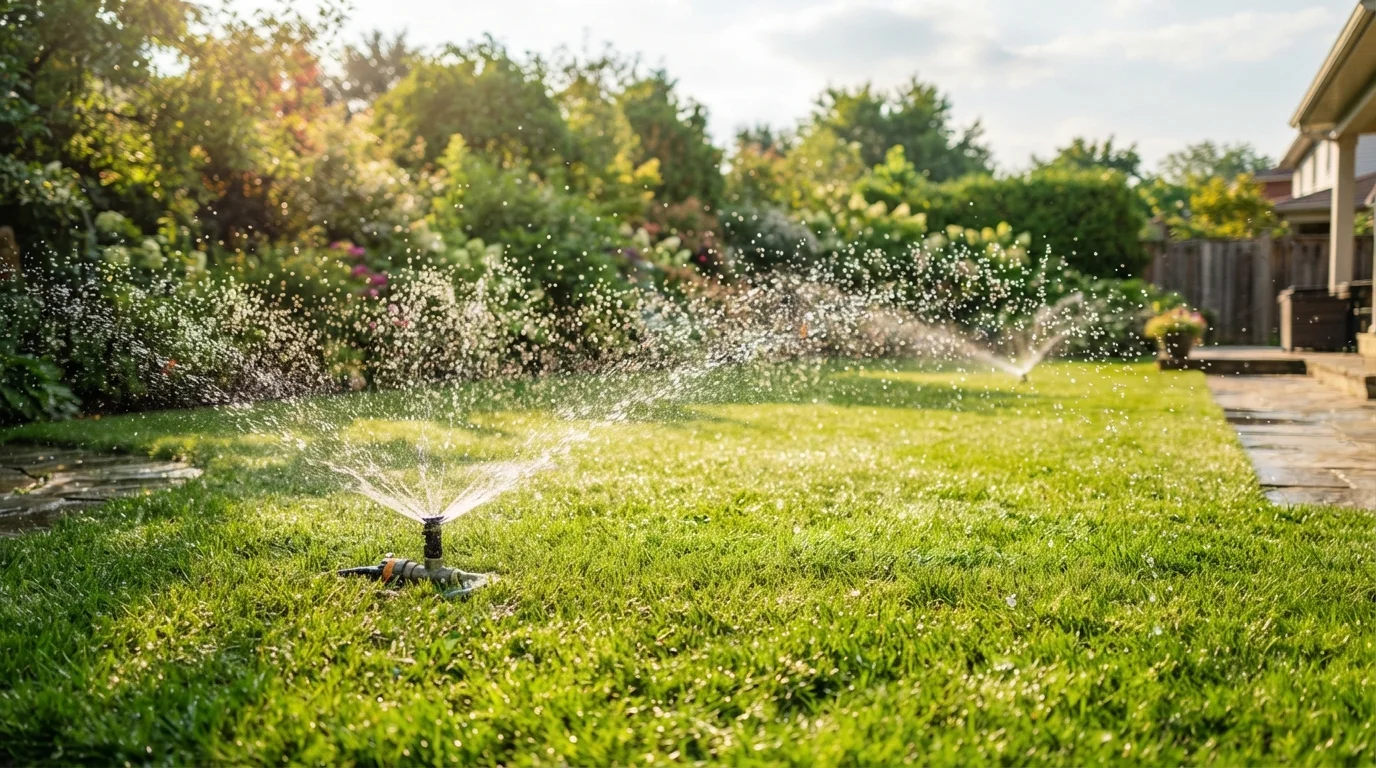
To measure how much your sprinkler system actually delivers, place a straight-sided container - an empty tuna can works perfectly - on the lawn while running your sprinklers. Time how long it takes to accumulate an inch. That gives you a reliable run time to hit your weekly target.
1-1.5 in.
Water needed per week by most lawns
This benchmark is consistent across cooperative extension recommendations from land-grant universities across the U.S.
~50%
Residential water used outdoors on average
According to the U.S. Environmental Protection Agency (EPA), roughly half of residential water use goes to landscaping and lawn irrigation.
30-50%
Outdoor water wasted through inefficiency
The EPA estimates that overwatering, evaporation, and runoff account for up to half of all outdoor water used in residential settings.
Soil Type, Grass Type, and Local Climate Change the Equation
The 1-inch rule is a starting point, not a fixed prescription. Three variables shift it significantly:
- Soil texture: Clay soils absorb water slowly but hold it well - water too fast and it runs off; water too often and roots suffocate. Sandy soils drain quickly and may need more frequent applications. Loam falls in between and is generally the easiest to manage.
- Grass species: Warm-season grasses - Bermuda, Zoysia, St. Augustine - are built for heat and handle drought better than cool-season varieties like Kentucky bluegrass or perennial ryegrass, which need more consistent moisture.
- Climate and season: A lawn in Phoenix in July faces far greater evaporation stress than one in the Pacific Northwest. Adjust based on temperature, humidity, and wind - not just the calendar.
If your lawn is showing uneven growth or bare patches, watering inconsistency is sometimes the culprit - though several other causes are worth ruling out. See why your grass looks patchy for a fuller breakdown.
Use a Rain Gauge to Take the Guesswork Out
An inexpensive rain gauge placed in an open area of your yard gives you an accurate weekly total of natural rainfall. Subtract that from your 1-to-1.5-inch target and only supplement the difference. This single habit can prevent the most common watering mistake: running the sprinklers on a schedule regardless of what the sky already delivered.
Timing, Signs of Stress, and Smarter Watering Habits
When you water matters nearly as much as how much. Early morning - before 10 a.m. - is consistently the most efficient window. Evaporation losses are lower, water pressure is typically stronger, and grass blades have time to dry before nightfall. Evening watering leaves foliage wet overnight, which is a reliable recipe for fungal problems.
Learning to read your lawn also reduces waste. Grass under water stress turns a blue-gray tint, loses its springiness, and holds footprints. These signals usually appear before visible browning - catching them early lets you water before damage sets in rather than after.
Overwatering has its own warning signs: persistently spongy turf, yellowed or thinning grass, and an earthy or musty smell from the soil surface. If you're running a sprinkler system, pairing it with a rain sensor or smart controller prevents unnecessary watering after rain - a simple upgrade that can noticeably reduce water bills.
For deeper efficiency gains, consider how your delivery method affects coverage and waste. Drip irrigation vs. sprinkler systems breaks down when each approach makes practical sense. And if compacted soil is limiting how well water penetrates, lawn aeration may be worth considering before the next growing season.