Why Skip the Chemicals?
Chemical herbicides can be effective, but they come with trade-offs: potential harm to beneficial soil organisms, runoff risk near waterways, and ongoing cost. Many homeowners are looking for reliable alternatives - not because chemical options don't work, but because non-chemical approaches can be equally effective when applied correctly and consistently.
The methods below are grounded in how weeds actually grow: they need light, open soil, and time to establish roots. Interrupt any of those conditions, and you cut the weed off before it becomes a problem. None of these strategies are silver bullets, but used in combination, they can keep most home gardens and lawn edges manageable without reaching for a sprayer.
Mulch early and mulch deep
A 2-3 inch layer of organic mulch - wood chips, straw, shredded leaves - blocks sunlight from reaching weed seeds in the soil. Without light, most seeds can't germinate. Mulch also conserves soil moisture and moderates temperature, improving conditions for your desirable plants at the same time.
Apply mulch in early spring before weeds get a foothold, and replenish it as it breaks down. Keep it pulled back slightly from plant stems to prevent rot. Our dedicated guide on mulching garden beds correctly covers depths, materials, and common application errors worth avoiding.
Two to three inches of mulch blocks light and cuts weed germination significantly without any chemicals.
Pull weeds before they set seed
Timing hand-pulling correctly is what makes it effective. A weed that's flowered but hasn't yet gone to seed is manageable; one that's already dropped seed has multiplied your future workload substantially. Many common weeds - dandelion, chickweed, crabgrass - produce hundreds of seeds per plant.
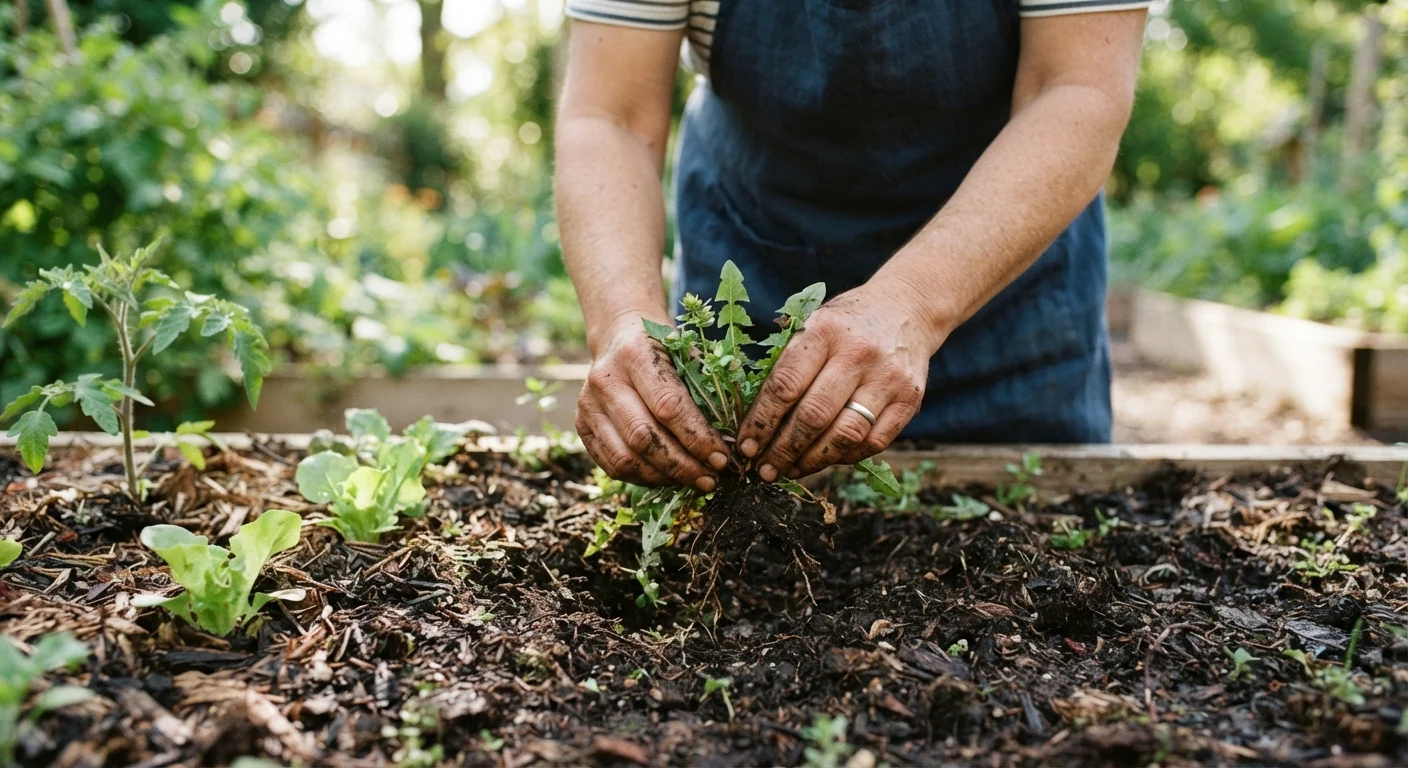
Make a habit of doing a quick walkthrough of garden beds weekly during the growing season. Young weeds with shallow roots come out easily by hand or with a simple hand weeder. Waiting until weeds are established makes removal harder and allows root systems to fragment, leaving pieces that re-sprout.
Pull weeds before they flower, and you prevent hundreds of future seedlings with one easy removal.
Close the gaps with dense planting
Bare soil is an open invitation. Weeds are opportunists - they colonize any uncovered ground quickly. Planting desirable species densely, using ground covers, or filling gaps with low-growing plants removes the open real estate weeds depend on.
This is sometimes called the "living mulch" approach. Ground covers like creeping thyme, clover, or low sedges can fill in spaces between taller plants, shading the soil surface and out-competing weed seedlings. Plan your planting layout with coverage in mind, not just aesthetics.
Dense planting eliminates the bare soil that weeds need to establish - nature abhors a vacuum.
Use a hoe - but do it right
A sharp hoe used correctly is one of the most efficient weed control tools available. The goal is to sever weed seedlings just below the soil surface, cutting the root from the shoot before the plant establishes. This works best on young weeds on a dry, sunny day - the severed seedlings desiccate quickly rather than re-rooting.
Avoid deep hoeing, which brings buried weed seeds to the surface where they can germinate. Skim the top half-inch of soil rather than turning it over. A stirrup hoe (also called a hula hoe) is particularly effective because it cuts on both the push and pull stroke.
A sharp hoe on a dry day can clear a bed of weed seedlings in minutes if you catch them young.
Smother with cardboard or landscape fabric
Sheet mulching with overlapping layers of cardboard - topped with several inches of wood chips or compost - can smother existing weeds and grass in areas you're preparing for new planting. The cardboard blocks light entirely, breaks down over several months, and improves soil structure as it decomposes. It's a practical option for converting a lawn area or reclaiming an overgrown bed.
Landscape fabric is a longer-term option for paths or permanent beds, though it works best under a layer of mulch and tends to degrade over time. Avoid it in vegetable beds where you'll be turning soil regularly - it becomes difficult to manage. Cardboard is better suited to one-season smothering before replanting.
Cardboard sheet mulching smothers existing weeds and breaks down naturally - no digging required.
Water where plants need it, not where weeds do
Broad overhead watering saturates the entire soil surface, including the spaces between your plants where weeds are waiting to germinate. Switching to drip irrigation or soaker hoses delivers water directly to plant root zones, leaving the surrounding soil drier and less hospitable to weed germination.
This won't eliminate weeds entirely, but it meaningfully reduces pressure - especially in vegetable gardens and established beds where layout allows targeted delivery. See how drip and sprinkler irrigation compare across key practical factors to decide whether the switch makes sense for your setup.
Watering only where plants root - not the whole bed surface - starves nearby weed seeds of moisture.
Putting It All Together
No single method does everything. The most resilient approach layers multiple strategies: keep soil covered with mulch, close planting gaps with desirable plants, stay on top of hand-pulling before seed sets, and use physical tools to make maintenance faster. Think of weed control as an ongoing system rather than a one-time fix.
Start Small, Stay Consistent
If your garden has significant weed pressure, don't try to overhaul everything at once. Tackle one bed at a time, get it under control, and maintain it before moving to the next. Consistent small efforts - ten minutes once a week - are far more effective than infrequent major interventions. Building the habit matters more than any single technique.
For more on how soil moisture and irrigation choices affect weed pressure, see our guide on how much water your lawn actually needs. And if you're reconsidering your garden layout entirely, our comparison of raised beds versus in-ground planting covers how each affects weed management alongside other practical factors.