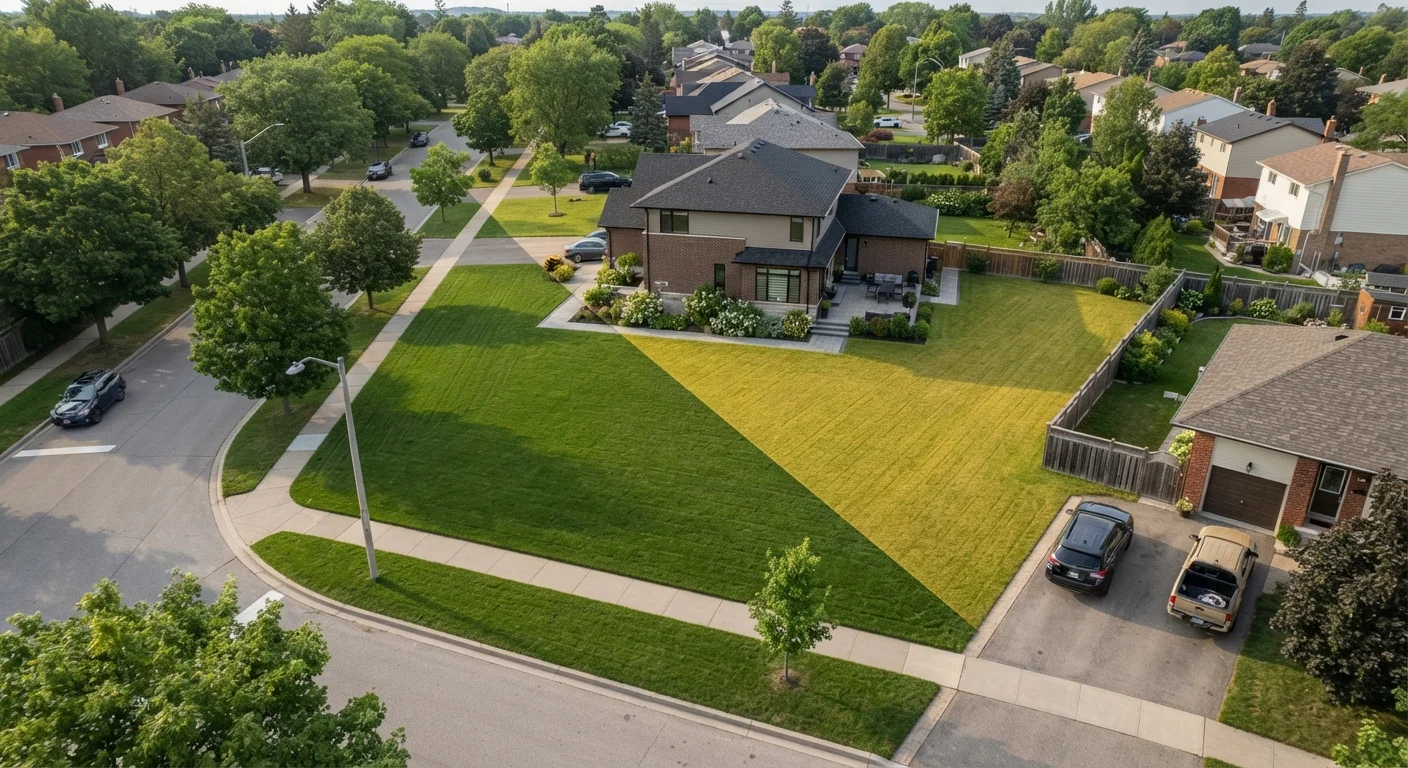
What Separates Cool-Season from Warm-Season Grasses
The distinction between cool-season and warm-season grasses isn't cosmetic - it's biological. Each group evolved under different temperature regimes, and that shapes when they grow, when they go dormant, and what care they need.
Cool-season grasses - including Kentucky bluegrass, perennial ryegrass, and tall fescue - do most of their growing when soil temperatures sit between 50°F and 65°F. That means active growth in spring and fall, with a slowdown (or full dormancy) in mid-summer heat. They stay green through mild winters in many northern regions.
Warm-season grasses - such as bermudagrass, zoysiagrass, centipedegrass, and St. Augustinegrass - hit their stride when soil temperatures exceed 70°F. They green up in late spring, grow aggressively through summer, and go dormant and turn brown once fall temperatures drop. In frost-free regions, some stay green year-round.
Both types can produce a healthy, attractive lawn - but only when matched to the right climate. Mismatching grass type to region is one of the most common reasons homeowners struggle with thin, patchy turf. See why patchy grass develops for a closer look at related causes.
| Criterion | Cool-Season Grasses | Warm-Season Grasses |
|---|---|---|
| Peak growth period | Spring and fall | Late spring through summer |
| Ideal soil temperature | 50°F-65°F | 70°F-90°F |
| Winter behavior | Stays green or semi-green | Goes dormant, turns brown |
| Summer behavior | Slows or goes dormant in heat | Active, vigorous growth |
| Drought tolerance | Moderate; needs regular irrigation | Generally higher; deeper roots |
| Common examples | Kentucky bluegrass, tall fescue, ryegrass | Bermuda, zoysia, St. Augustine, centipede |
| Best U.S. region | Northern states, transition zone | Southern states, Southwest |
| Fertilizing window | Primarily fall, light spring | Late spring through summer |
Regional Fit: Where Each Type Belongs
The U.S. is broadly divided into three lawn climate zones: the cool-humid north, the warm-humid south, and the warm-arid southwest. A fourth area - the transition zone - runs roughly from Virginia through Missouri and into Kansas, where neither grass type is perfectly suited.
~1,000
Grass species found in North America
According to the University of California Agriculture and Natural Resources, roughly 1,000 grass species are native or naturalized in North America, but only a small fraction are used in home lawns.
~600 miles wide
Estimated width of the U.S. transition zone
Turfgrass specialists estimate the transition zone spans several hundred miles from north to south, covering portions of roughly 10 states where neither grass type is ideally suited.
30-60%
Household water use that goes to landscaping
The U.S. Environmental Protection Agency estimates that landscape irrigation accounts for roughly 30 to 60 percent of residential water use, making grass-type selection a meaningful conservation factor.
- Northern states (New England, upper Midwest, Pacific Northwest): Cool-season grasses are the clear choice. Harsh winters eliminate most warm-season options.
- Southern states (Florida, Gulf Coast, Deep South): Warm-season grasses dominate. The heat and humidity of a southern summer will stress or kill cool-season turf.
- Transition zone: Tall fescue is often the most practical cool-season option here because of its heat tolerance. Zoysiagrass performs reasonably well from the warm-season side. Neither is perfect.
- Arid Southwest: Bermudagrass and buffalograss are common choices, prized for drought tolerance.
Your local cooperative extension service - run through land-grant universities - publishes region-specific grass recommendations and is a reliable, free resource for homeowners unsure about their zone.
How Grass Type Shapes Your Maintenance Calendar
Once you know which type you have, your maintenance timing follows logically from the growth cycle.
For cool-season grasses: fertilize primarily in fall (the main growth flush), overseed in late summer to early fall, and aerate in fall when the grass is actively recovering. Spring fertilization should be light - pushing too much growth before summer heat arrives weakens the lawn. Aeration timing matters more than most homeowners realize.
For warm-season grasses: fertilize in late spring through summer, aerate in late spring, and plan any overseeding or plugging for early summer when soil is warm. Avoid fertilizing in fall - it stimulates growth heading into dormancy and can increase winter injury risk.
Watering needs also differ by type and season. Matching your irrigation schedule to growth cycles prevents overwatering during dormancy and underwatering during peak growth. For a full month-by-month breakdown, the seasonal lawn care calendar covers both grass types across U.S. regions.
What About the Transition Zone?
The transition zone is genuinely challenging - summers are too hot for cool-season grasses to thrive, and winters are too cold for most warm-season grasses to survive reliably. Tall fescue is widely recommended as the most durable cool-season option here, while zoysiagrass is the warm-season type with the best cold hardiness. Many homeowners in this zone accept some seasonal imperfection rather than fighting their climate. Your county's cooperative extension office can provide the most locally accurate guidance.