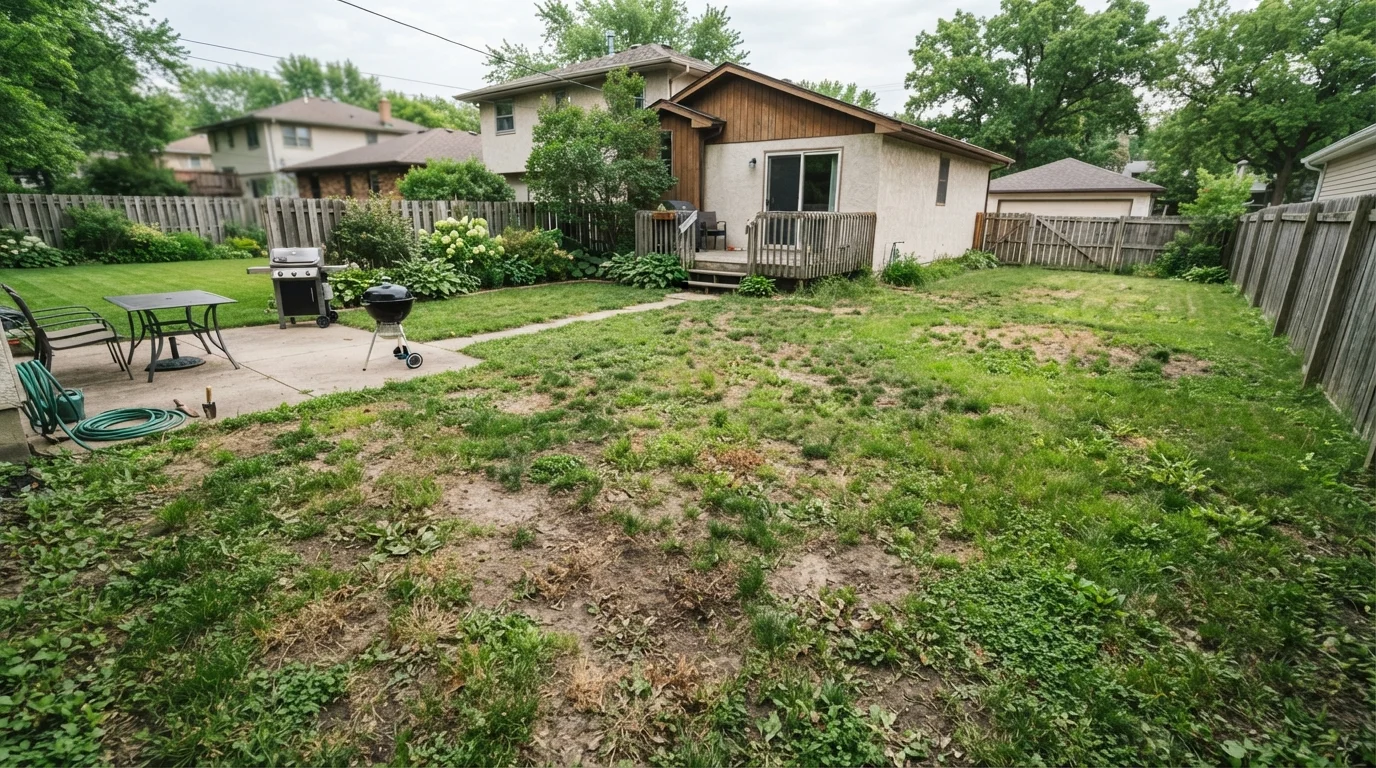
Why Diagnosing Before Acting Matters
A patchy lawn is one of the most common frustrations homeowners bring up in spring and fall - but the mistake most people make is jumping straight to reseeding or fertilizing without figuring out why the grass failed in the first place. Bare spots and thin growth almost always point to a fixable underlying condition. Treat the symptom without addressing the cause and you'll be back in the same spot (literally) next season.
The good news: most patchy lawns follow recognizable patterns. Dog damage, foot traffic, disease, and soil problems each leave distinct footprints. Learning to read those patterns saves you from wasted effort and puts you on the fastest path to recovery. See our Seasonal Lawn Care Calendar to understand when to tackle each repair task for best results.
Reseeding patchy spots without fixing the underlying soil or drainage problem first.
Why it happens: Homeowners understandably want fast results, and throwing down seed feels productive. But new seed planted into compacted, poorly draining, or pH-imbalanced soil faces the same hostile conditions that killed the original grass.
Using the wrong grass seed for your climate or existing lawn type.
Why it happens: Seed packages are often labeled with vague terms like "sun and shade mix," and homeowners pick whatever is available rather than matching seed to their specific turf type and region.
Mowing too short, stressing grass and leaving it vulnerable to bare patches.
Why it happens: Many homeowners assume a shorter cut means less frequent mowing and a neater appearance. In reality, cutting more than one-third of the blade height at once (a common guideline called the "one-third rule") weakens the plant.
Watering too frequently and too shallowly, creating weak root systems.
Why it happens: Daily light watering feels conscientious, but it trains roots to stay near the surface where they're exposed to heat and drought stress. Shallow-rooted grass thins and patches more easily.
Ignoring lawn disease and mistaking fungal damage for drought stress or grub activity.
Why it happens: Brown patches from fungal disease, grubs, and drought can look similar at a glance. Homeowners often respond with more water, which worsens fungal problems and delays the correct treatment.
Soil and Watering Problems That Fuel Patchiness
Even if you reseed perfectly, bare spots will persist if the soil beneath them is compacted, waterlogged, or severely nutrient-deficient. Compacted soil - common in high-traffic areas, clay-heavy yards, or spots near driveways - prevents roots from establishing. Water pools on the surface rather than penetrating, and grass thins out or dies. Lawn aeration is often the most direct fix: it breaks up compaction and lets air, water, and nutrients reach the root zone.
Don't Mistake Overwatering for Under-Watering
Yellowing or browning grass doesn't always signal drought. Overwatered soil deprives roots of oxygen and promotes fungal disease, producing symptoms that look similar to drought stress. Before increasing irrigation, check soil moisture two to three inches below the surface - if it's already wet, hold off on watering and evaluate drainage instead.
Watering habits also create uneven growth. Shallow, frequent watering encourages shallow roots that dry out quickly during heat. Deep, less frequent irrigation - typically an inch of water per week, applied in one or two sessions - builds the root depth that supports dense, resilient turf. Overwatering creates its own problems: soggy soil invites fungal disease, which shows up as irregular brown or gray patches that don't respond to more water.
~40%
Of lawn problems linked to soil compaction
University cooperative extension programs frequently cite soil compaction as a factor in roughly a third to half of common lawn failure cases, particularly in high-traffic residential yards.
1 inch/week
Recommended lawn watering depth
Most turfgrass research from land-grant universities supports approximately one inch of water per week as a general guideline for established cool- and warm-season lawns under average conditions.
Getting the Repair Right
Once you've identified the cause, the repair approach follows logically. For bare spots caused by soil compaction, aerate first, then overseed. For disease-related patches, allow the soil to dry out and improve drainage before reseeding. For dog spots, flush the area with water to dilute nitrogen salts, then reseed with a wear-tolerant variety once the grass has had time to recover.
Grass variety matters enormously here. Reseeding with the wrong type - say, a cool-season fescue into a warm-season bermudagrass lawn - virtually guarantees poor results. Our guide on cool-season vs. warm-season grasses explains how to identify what you have and choose the right seed or sod for your region.
New Seed Needs Consistent Moisture to Establish
Germinating grass seed cannot tolerate the dry-out cycles that established lawns can survive. After overseeding, keep the top inch of soil consistently moist - often requiring light watering once or twice daily - until seedlings reach mowing height. Neglecting this critical window is one of the leading reasons repair attempts fail.
Timing is just as important as technique. Cool-season grasses repair best when seeded in late summer to early fall; warm-season grasses fill in most reliably in late spring through early summer. Seeding outside these windows puts new seedlings in competition with temperature extremes or weeds, reducing establishment rates significantly.