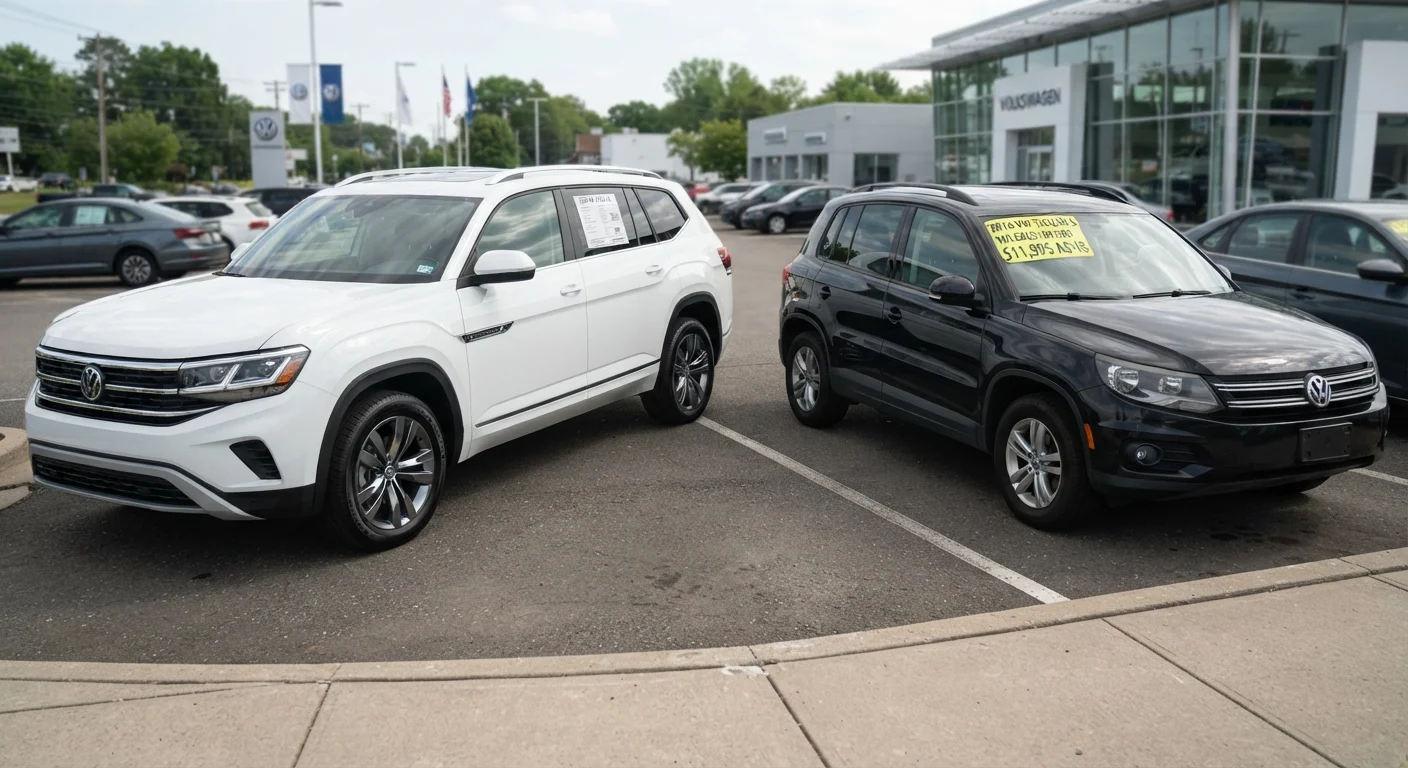
The Price Gap: More Complicated Than It Looks
The sticker price on a new car is the obvious starting point, but it rarely tells the full story. New vehicles command a significant premium over comparable used models - often tens of thousands of dollars for the same segment. However, financing costs, incentives, and depreciation all shift the real-world math in ways that aren't immediately obvious.
Used cars generally cost less upfront, but lenders typically charge higher interest rates on used vehicle loans than on new ones. A lower purchase price paired with a noticeably higher interest rate can erode some of the apparent savings, particularly on longer loan terms. Running the total cost of financing - not just the monthly payment - is essential before drawing conclusions.
Taxes and registration fees are another variable. In most states, these are calculated on purchase price, so a cheaper used vehicle usually means a lower tax bill at signing. For a fuller picture of what vehicle ownership costs over time, see the comprehensive guide to vehicle ownership in America.
| New Car | Used Car | |
|---|---|---|
| Purchase Price | Higher upfront cost | Lower upfront cost |
| Depreciation Exposure | Steepest in first 1-3 years | Curve already flattened |
| Financing Rates | Typically lower APR | Typically higher APR |
| Warranty Coverage | Full manufacturer warranty | Partial, CPO, or none |
| History Transparency | Completely known | Requires research and inspection |
| Technology & Safety Features | Latest available | May lack recent advances |
| Registration & Taxes | Higher (based on price) | Lower (based on price) |
Depreciation: The Hidden Cost of Buying New
Depreciation is the single biggest financial argument against buying new. A new vehicle can lose a significant portion of its value within the first year alone, with the steepest drop often occurring in years one through three. A buyer who purchases a two- or three-year-old vehicle effectively lets the first owner absorb that loss.
The flip side: when it eventually comes time to sell or trade in, a used car that has already depreciated heavily will lose less absolute value going forward. The curve flattens. That said, resale value depends heavily on make, model, mileage, and condition - not just age. For context on how the selling side of this equation works, selling privately vs. trading in at a dealership involves its own set of trade-offs worth understanding before you buy.
~20%
Typical first-year depreciation on a new vehicle
Industry analysts commonly estimate new cars lose roughly 15-20% of value in the first year of ownership, with the sharpest drop occurring in the first months.
2-4 years
Age range often cited for best used-car value
Consumer financial educators frequently note that vehicles in the two-to-four-year age range have absorbed the steepest depreciation while often retaining significant warranty or CPO eligibility.
Warranty and Reliability: What You're Actually Covered For
New cars come with manufacturer warranties - typically a bumper-to-bumper coverage period and a longer powertrain warranty. This coverage significantly reduces financial exposure to repair costs during the early ownership period. You know exactly what protection you have and from whom.
Used cars are a mixed picture. A vehicle still within its original warranty window offers some of that same protection. A certified pre-owned (CPO) vehicle - sold through a franchised dealer and subject to manufacturer-defined inspection standards - typically extends limited coverage beyond the original term. But a standard used car sold "as-is" carries no warranty, and any repair cost falls entirely on the buyer.
Reliability history matters here too. Some vehicles have well-documented track records for low repair frequency; others accumulate problems at predictable mileage thresholds. Researching reliability data for specific models before buying is time well spent. If you're considering supplemental protection on a used purchase, extended vehicle warranties come with notable coverage gaps that are worth understanding before signing.
Check Reliability Data Before Committing
Reliability varies dramatically by make and model - not just by age. Before finalizing any vehicle purchase, review long-term reliability data from independent automotive research sources. Some models have well-documented weak points at specific mileage ranges. Knowing these in advance lets you negotiate, budget for repairs, or avoid a problematic vehicle altogether.
Due Diligence: What Used-Car Buyers Must Do
The used-car market rewards prepared buyers and punishes careless ones. A vehicle history report - available through established data services using the vehicle's VIN - can surface prior accidents, title issues, odometer discrepancies, and service records. It's a necessary starting point, not a complete picture.
A pre-purchase inspection (PPI) by an independent, qualified mechanic is equally important. This involves having the vehicle inspected before you commit, ideally at a shop with no financial stake in the sale. The cost is modest; the information it provides can prevent an expensive mistake. For a detailed rundown of the missteps that cost used-car buyers the most, see buying a used car without getting burned.
Maintenance history - either through service records or a history report - also matters for long-term reliability. A well-maintained used vehicle with documented care is a stronger choice than a newer one with gaps in its service record. Deferred maintenance tends to compound into larger repair costs that fall squarely on the next owner.
Never Skip the Pre-Purchase Inspection
A vehicle history report is valuable but incomplete - it only captures events that were officially recorded. Flood damage, undisclosed mechanical wear, or amateur repairs may not appear in any database. An independent mechanic's inspection is the most reliable way to uncover problems before they become your financial responsibility. Skipping this step to save time or money is one of the costliest decisions used-car buyers make.