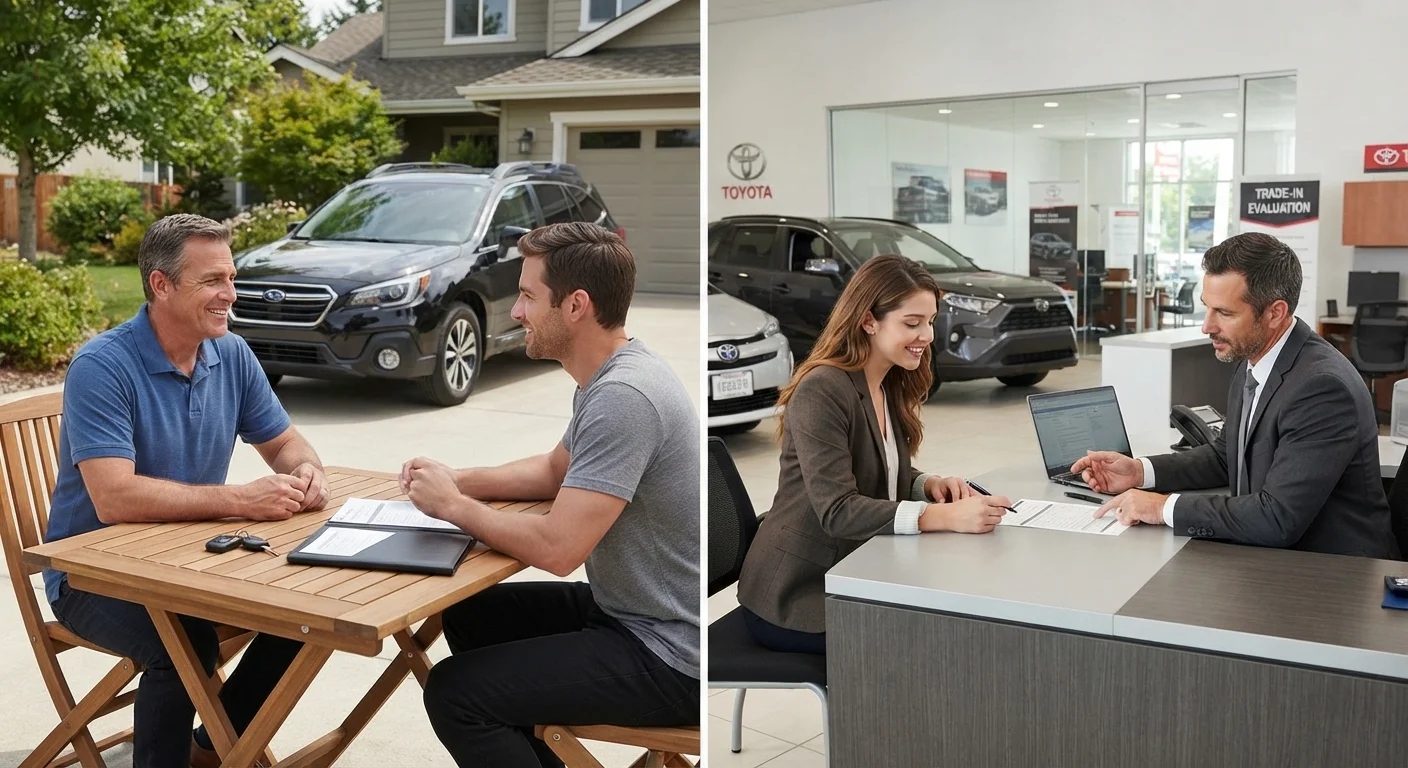
The Core Trade-Off: Money vs. Convenience
When it's time to move on from a vehicle, most owners face the same fork in the road: sell it themselves or hand it over to a dealership as a trade-in. The difference in net proceeds can be meaningful. Dealerships need to profit on resale, so they typically offer less than what a private buyer would pay for the same car. How large that gap is depends on the vehicle's condition, market demand, and how well-prepared the seller is.
For context, resources like Kelley Blue Book and Edmunds publish both private-party and trade-in value estimates for most vehicles - comparing those two figures for your specific car gives a realistic sense of what you stand to gain or lose by choosing convenience over effort. That spread is often in the range of a few hundred to several thousand dollars.
See our complete guide to vehicle ownership for a broader look at how selling fits into the full arc of owning a car in the U.S.
| Private Sale | Trade-In | |
|---|---|---|
| Typical payout | Higher (private-party market value) | Lower (dealer resale margin applied) |
| Time required | Weeks to months | Same day to a few days |
| Effort level | High - listing, vetting buyers, negotiating | Low - dealer handles most steps |
| Paperwork responsibility | Seller manages title transfer | Dealer handles transfer |
| Sales tax benefit | None | Possible reduction on new purchase (state-dependent) |
| Safety considerations | Must vet strangers, manage payment risk | Minimal - controlled environment |
What Private Selling Actually Involves
Selling privately means you become the seller in a two-party transaction. That involves listing the vehicle, responding to inquiries, arranging test drives with strangers, negotiating price, and handling the paperwork to transfer the title. In most states, you'll also need to notify the DMV of the sale and potentially cancel or transfer your plates.
Prepare Your Vehicle Before Listing
A clean, well-documented car sells faster and commands a higher price in a private transaction. Gather your maintenance records, have the vehicle detailed, and obtain a vehicle history report before listing. Buyers who see transparency upfront are less likely to lowball or walk away.
Safety is a real consideration - meeting unknown buyers, sharing your address, and accepting payment all carry risks that a dealership transaction eliminates. Accepting a cashier's check or using a verified payment platform reduces exposure, but due diligence is still required.
Liability is another factor. Until the title is properly transferred and the state notified, you may remain on record as the registered owner. If the buyer is involved in an incident before completing registration, that creates complications. Understanding your state's specific transfer requirements matters. If you're also in the market for a replacement, avoid the common missteps buyers make when evaluating used vehicles.
How Trade-Ins Work - and Where the Value Goes
A trade-in is essentially a simultaneous sale and purchase handled by the dealership. You bring in your current vehicle, the dealer appraises it, and the offered amount is subtracted from the price of whatever you're buying. The paperwork is handled in-house, the title transfer is the dealer's responsibility, and you walk out without having to coordinate with private buyers at all.
The convenience comes at a cost. Dealers factor reconditioning, auction fees, and their resale margin into the appraisal. That said, trading in can have a tax advantage in many states: sales tax on a new purchase is calculated on the price after the trade-in is applied, which can partially offset the lower payout depending on your state's tax rate and the value of the vehicle.
$1,000-$3,000+
Typical private sale premium over trade-in
The gap between private-party and trade-in values varies by vehicle, condition, and market, but commonly falls in this range according to automotive valuation guides.
~45 days
Average time to sell privately
Industry estimates suggest private vehicle listings often take several weeks to close, depending on asking price, vehicle type, and local demand.
If you're deciding between leasing or financing your next vehicle after the trade, understanding how those two paths differ can help you avoid surprises at the signing table.
Making the Call: Which Route Fits Your Situation
A few practical questions narrow this down quickly. How much time can you realistically commit? A private sale often takes weeks; a trade-in can close the same day. Is your vehicle in clean condition with a clear title? Those factors make a private sale more viable and more attractive to buyers. Do you need the proceeds to fund your next purchase simultaneously? Trade-ins simplify that considerably.
If you're weighing whether to move into a new vehicle at all, the new vs. used trade-offs are worth reviewing before you commit to either selling path.
There's no wrong answer here - only the one that fits your circumstances. Run the numbers using both trade-in and private-party estimates, factor in your state's tax treatment of trade-ins, and be honest about how much friction you're willing to absorb. That calculation usually points clearly in one direction.