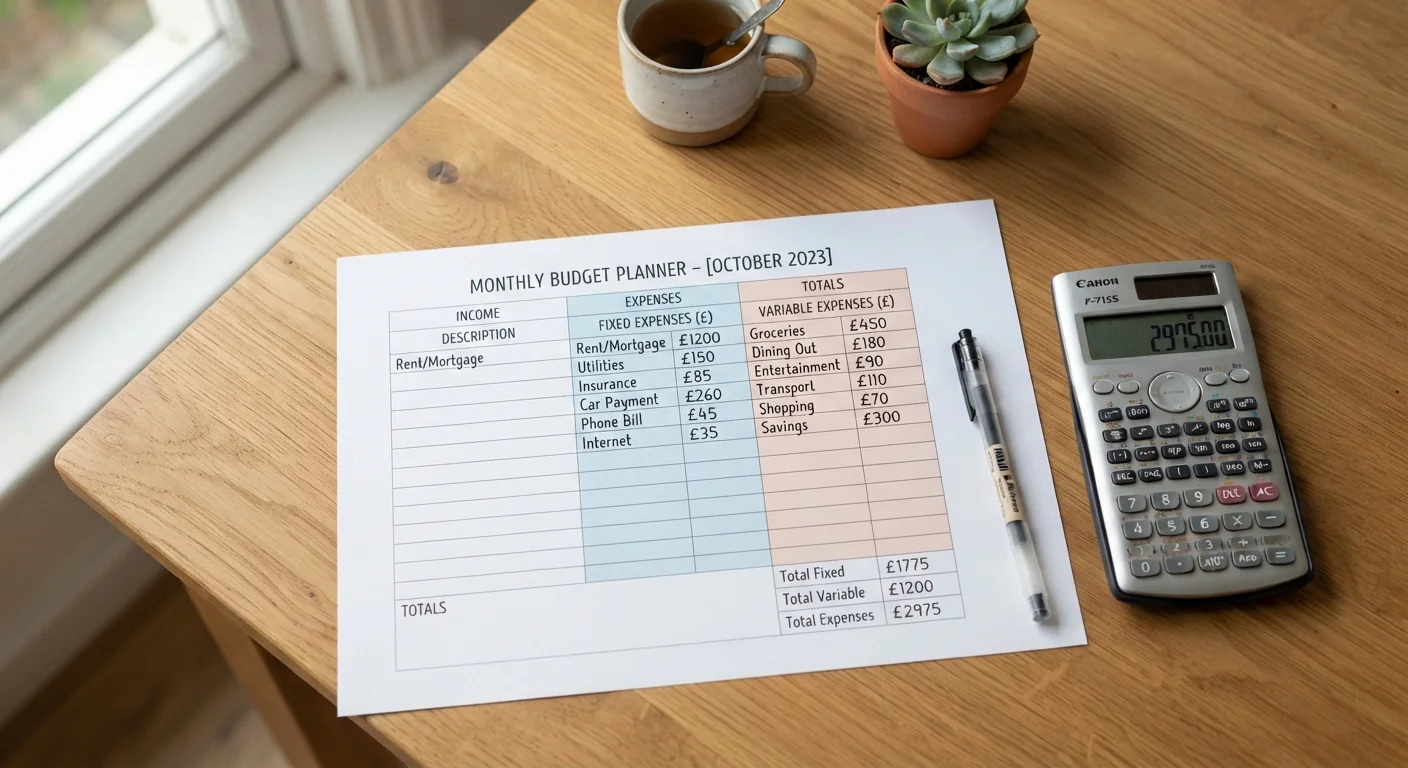
The Core Distinction: Predictability vs. Variability
Every dollar you spend each month falls into one of two categories: it either costs you roughly the same amount every billing cycle, or it shifts depending on your habits, choices, or usage. That's the entire fixed vs. variable distinction - and it's more useful than it sounds.
Fixed expenses are costs that stay constant from month to month. Your rent or mortgage payment, car loan installment, insurance premiums, and any subscription with a flat rate are classic examples. Whether you had a great month financially or a tight one, these numbers don't change. They hit your account on schedule, in the same amount, with no behavioral lever you can pull in the short term.
Variable expenses, by contrast, fluctuate based on consumption or choices. Groceries, gasoline, dining out, clothing, utilities, and entertainment spending all land here. Some months you spend more; some months you spend less. Crucially, many of these costs can be adjusted if you need to tighten your budget.
For a plain-language definition of these and other budgeting terms, see our personal finance glossary.
| Criterion | Fixed Expenses | Variable Expenses |
|---|---|---|
| Monthly amount | Stays the same | Changes each month |
| Examples | Rent, car loan, insurance | Groceries, gas, dining out |
| Short-term control | Little to none | High - behavior-driven |
| Role in emergency planning | Sets survival spending floor | First area to cut in a crunch |
| Budget predictability | Fully predictable | Requires tracking and estimates |
| Where surprises happen | Rarely | Frequently, especially lifestyle costs |
Why the Distinction Matters More Than You Think
Categorizing expenses isn't an academic exercise - it directly shapes how you build and stress-test a budget. When you know your total fixed expenses, you know your spending floor: the minimum amount of income you need to get through the month without missing a payment. That number is non-negotiable. It should be the first thing you cover when income arrives.
Variable expenses represent your zone of agency. If your income drops or you're trying to accelerate savings, variable costs are where adjustments happen. You can't easily renegotiate your mortgage mid-month, but you can choose to cook at home more or delay a discretionary purchase.
~$6,000
Average U.S. monthly household spending
According to the U.S. Bureau of Labor Statistics Consumer Expenditure Survey, the average American household spends roughly $72,000 annually, with housing alone accounting for roughly one-third of that total.
33%
Share of spending going to housing
The BLS Consumer Expenditure Survey consistently shows housing as the single largest fixed expense category for American households, underscoring why it anchors most budget calculations.
This distinction also matters for emergency planning. A lean emergency fund calculation often starts with: How many months of fixed expenses can I cover? That framing focuses on survival - keeping housing, insurance, and essential loans paid - rather than maintaining your full lifestyle. Understanding the category helps you set a realistic target.
Variable expenses are also where budget surprises tend to live. Categories like dining, entertainment, and personal care often run higher than people estimate. Our article on spending categories that derail budgets covers the most common culprits in depth.
The Gray Zone: Expenses That Don't Fit Neatly
Some costs blur the line between fixed and variable - and misclassifying them is a common budgeting mistake. Consider these examples:
- Utilities: Your electric bill arrives monthly, but the amount varies with usage and season. It's variable, even though it feels routine.
- Minimum debt payments: These are fixed - required, predictable, and not reducible in the short term. But if you pay extra toward a balance, that extra is variable.
- Annual or irregular bills: Car registration, insurance renewals, and property taxes don't appear every month. They're often forgotten in monthly budgets and arrive as surprises. The solution is to divide the annual total by 12 and set aside that amount each month - a practice sometimes called a sinking fund.
If you earn a paycheck that changes month to month, the fixed/variable framework becomes even more critical. Our guide on budgeting on an irregular income walks through specific strategies for variable earners.
When a 'Fixed' Expense Can Be Renegotiated
Fixed expenses are stable month to month, but that doesn't mean they're permanent. Insurance premiums, subscription services, and even some loan terms can sometimes be adjusted through shopping around, negotiating, or refinancing - though these changes take time and planning. The distinction between fixed and variable describes your budget today, not what's possible over the longer term.
Once you understand how your expenses break down, you can apply that knowledge to any formal budgeting method. Both the zero-based approach and the 50/30/20 rule, for example, rely on this categorization as a starting point. See how they compare in our zero-based vs. 50/30/20 budgeting breakdown.
This article is for general informational and educational purposes only and does not constitute personalized financial advice. Consult a qualified financial professional for guidance tailored to your specific situation.