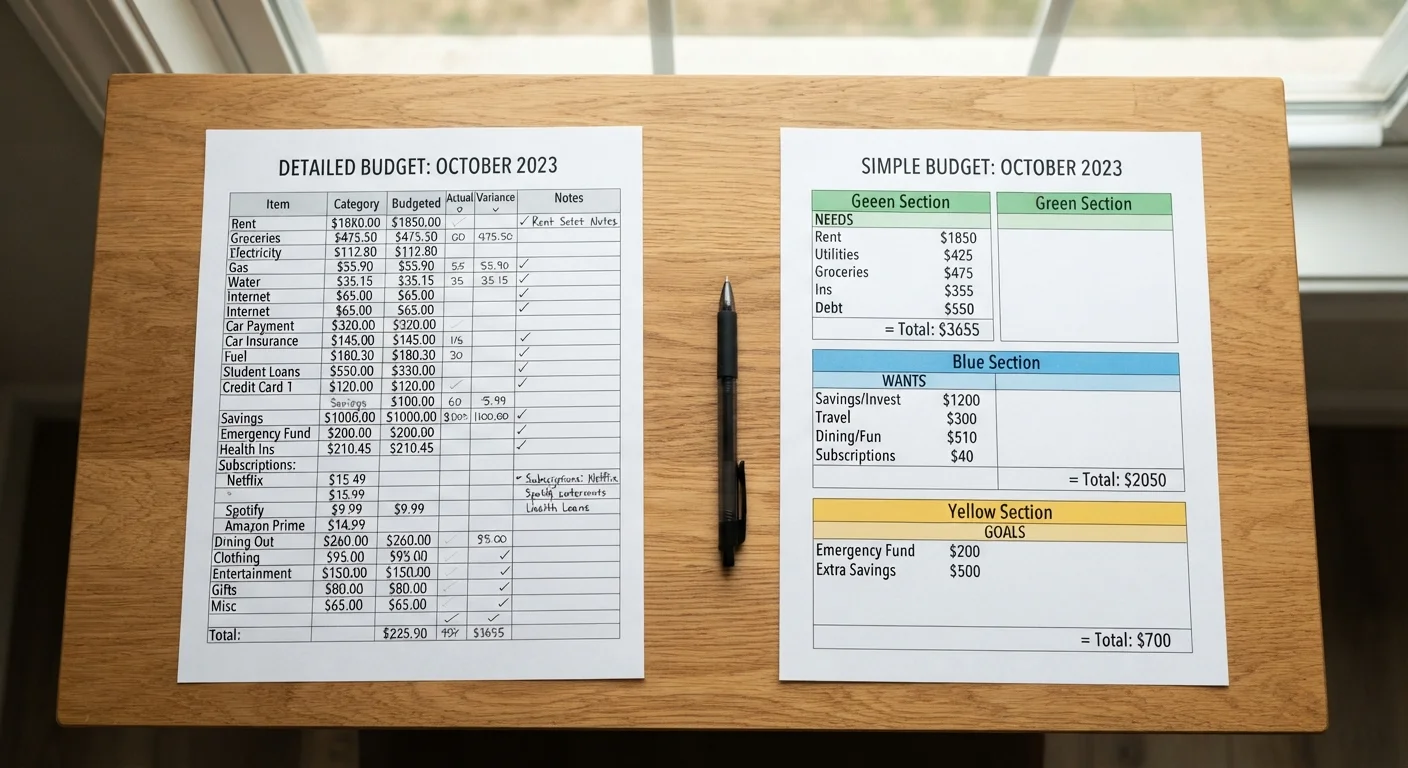
How Each Method Actually Works
Before comparing the two frameworks, it helps to understand what each one asks you to do in practice.
Zero-based budgeting starts with your total monthly income and requires you to assign every single dollar to a category - housing, groceries, utilities, savings, debt payments, entertainment - until your income minus your planned spending equals zero. That zero doesn't mean you spend everything; it means every dollar has an intentional destination, including savings and investments. The method was popularized in corporate finance but has been widely adapted for personal use.
The 50/30/20 rule, often attributed to bankruptcy scholar Elizabeth Warren and co-author Amelia Warren Tyagi, works differently. You take your after-tax income and split it three ways: roughly 50% toward needs (rent, utilities, groceries, minimum debt payments), 30% toward wants (dining out, subscriptions, hobbies), and 20% toward savings and additional debt repayment. It's a framework, not a rigid formula - the percentages are guidelines, not rules etched in stone.
If you've never built a budget before, our plain-language beginner's walkthrough covers the foundational steps that apply to both methods.
| Criterion | Zero-Based Budgeting | 50/30/20 Rule |
|---|---|---|
| Core principle | Every dollar assigned; income minus expenses = 0 | Income split into three percentage buckets |
| Setup time | 30-60 min per month | Under 15 min per month |
| Level of detail | High - line-by-line categories | Low - three broad buckets |
| Works well with variable income | Yes - rebuilt each month | Less well - percentages shift unpredictably |
| Debt payoff focus | Strong - surplus directed deliberately | Moderate - included in 20% bucket |
| Beginner-friendliness | Steeper learning curve | Very accessible |
| Risk of abandonment | Higher (time burden) | Lower (simplicity) |
Time Investment and Ongoing Effort
One of the most practical differences between these methods is how much time they require each month.
Zero-based budgeting is genuinely labor-intensive. You'll typically spend 30-60 minutes at the start of each month building or adjusting your category allocations, then track actual spending throughout the month against your plan. For many people, this means using a spreadsheet or a dedicated app. Our spreadsheet vs. budgeting app comparison can help you decide which tracking tool suits your habits.
The 50/30/20 rule is considerably lighter. Once you know your take-home income, the math takes minutes. You're not tracking dozens of sub-categories - just confirming that spending across three broad buckets stays roughly within range. For some households, a monthly check-in of 10-15 minutes is enough. Our monthly budget health check offers a structured way to do that review regardless of which method you use.
~74%
Americans living paycheck to paycheck
A 2023 survey by LendingClub found roughly three in four Americans reported living paycheck to paycheck, underscoring the real need for an active spending plan.
20%
Savings and debt target in 50/30/20
The 50/30/20 rule's savings-and-debt bucket aligns with the general personal finance guideline of saving at least 15-20% of gross income for long-term security.
Where Each Method Can Fall Short
Neither framework is without limitations, and being honest about them helps you set realistic expectations.
Zero-based budgeting pitfalls: The method can feel exhausting to maintain, particularly for people with busy schedules or variable spending patterns. Category creep - adding too many micro-categories - can make the budget unwieldy. There's also a psychological cost: some people find the granular tracking stressful rather than empowering, which can lead to abandonment. The honest case for and against strict budgeting explores this tension in more depth.
50/30/20 rule pitfalls: The framework assumes your income is high enough that 50% covers genuine needs - an assumption that doesn't hold for lower-income households in high cost-of-living areas, where housing and essentials alone may consume 60-70% of take-home pay. It also blurs the line between needs and wants, leaving room for rationalization. Our companion piece on what the 50/30/20 rule gets right and where it falls short goes deeper on those gaps.
Whatever method you choose, the goal is a budget that you'll actually maintain. Our guide to building a budget that actually lasts argues that consistency matters more than methodological purity.
You Can Blend Both Approaches
Nothing stops you from using the 50/30/20 rule as a high-level check and zero-based thinking within a single category. For example, you might confirm that your needs stay under 50% of income while assigning every dollar inside that 50% to specific expenses. Hybrid approaches are common and often more sustainable than strict adherence to one method. As with any financial decision, what works best depends on your individual situation - consider speaking with a certified financial planner if you're unsure which structure fits your goals.