What Each Account Is Actually For
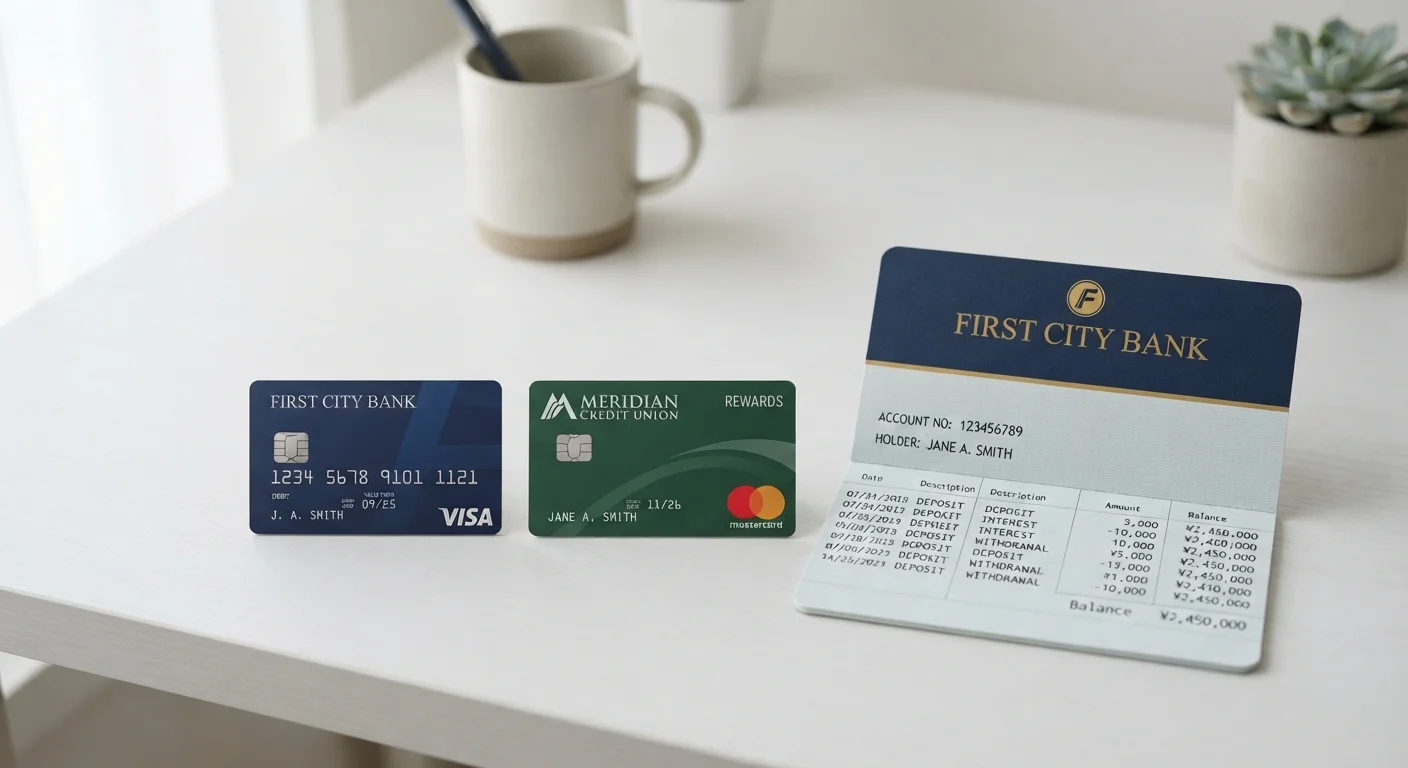
A checking account is a deposit account intended for regular, frequent use. You deposit money in and move it out - to pay rent, buy groceries, cover a utility bill. It's designed for liquidity, meaning your money is always accessible. Most checking accounts come with a debit card, check-writing privileges, and online bill pay.
A savings account, by contrast, is designed to hold money you don't intend to spend right away. The primary purpose is to separate those funds from your everyday cash and, ideally, have them earn a modest amount of interest over time. For more on how that interest can work in your favor, see how compound interest works for savings.
Neither account type is universally better - they serve genuinely different functions. Understanding that distinction is the foundation of sound day-to-day money management.
Key Differences at a Glance
The contrast between these two account types comes down to access, interest, and purpose. Here's a direct comparison across the criteria that matter most for everyday use.
| Criterion | Checking Account | Savings Account |
|---|---|---|
| Primary purpose | Daily spending and transactions | Storing and growing reserve funds |
| Transaction frequency | Unlimited in most cases | May be limited by institution policy |
| Earns interest | Rarely; usually minimal | Yes, typically via APY |
| Debit card access | Standard | Usually not included |
| Check writing | Yes | Rarely available |
| Federal deposit insurance | Up to $250,000 (FDIC/NCUA) | Up to $250,000 (FDIC/NCUA) |
| Best used for | Bills, purchases, payroll receipt | Emergency fund, goals, reserves |
One important note on transaction limits: the Federal Reserve's Regulation D historically capped savings account withdrawals at six per month. The Fed suspended that rule in 2020, but many financial institutions still enforce their own similar limits - so check with your specific bank or credit union before assuming unlimited access.
How Interest Works (and Why It Matters)
Most standard checking accounts pay little to no interest. Some financial institutions offer interest-bearing checking accounts, but these often require maintaining a minimum balance or meeting other conditions.
Savings accounts, on the other hand, are structured to pay interest - expressed as an APY. The APY reflects how much your balance will grow in a year, including compounding. Even a modest APY on a dedicated savings account can meaningfully add up when money sits there consistently over time.
$250,000
Federal deposit insurance limit per depositor
The FDIC and NCUA each insure deposits up to this amount per depositor, per insured institution, per ownership category.
~0.01%-0.07%
Typical APY on traditional checking accounts
According to Federal Reserve and FDIC surveys, interest-bearing checking accounts at large banks often yield less than a tenth of a percent annually.
It's worth noting that APYs vary considerably by institution and change with broader interest rate conditions. Online banks and credit unions often offer higher rates than traditional brick-and-mortar banks. For a deeper look at institutional differences, see how credit unions and banks differ structurally.
Using Both Accounts Together
The most practical approach for most people isn't choosing one account over the other - it's using both in tandem. Your checking account handles the flow of money in and out each month. Your savings account holds your reserve funds: an emergency fund, a travel goal, a down payment.
A common setup: direct deposit goes into checking, and a fixed automatic transfer moves a portion into savings each payday. This separates spending money from saved money without requiring active effort. For guidance on structuring that within a broader spending plan, the Budgeting Basics hub is a useful starting point.
If you carry debt alongside savings, that balance isn't always obvious - when it makes sense to save while in debt explores the trade-offs clearly.
Overdraft Risk in Checking Accounts
Because checking accounts see constant activity, they carry a higher risk of overdrafts - when your balance dips below zero due to a transaction. Many institutions offer overdraft protection programs, but these come with their own costs and conditions. Before enrolling, review the trade-offs of overdraft protection so you understand what you're agreeing to.
This article is for general informational purposes only and does not constitute personalized financial advice. Consult a licensed financial professional for guidance specific to your situation.