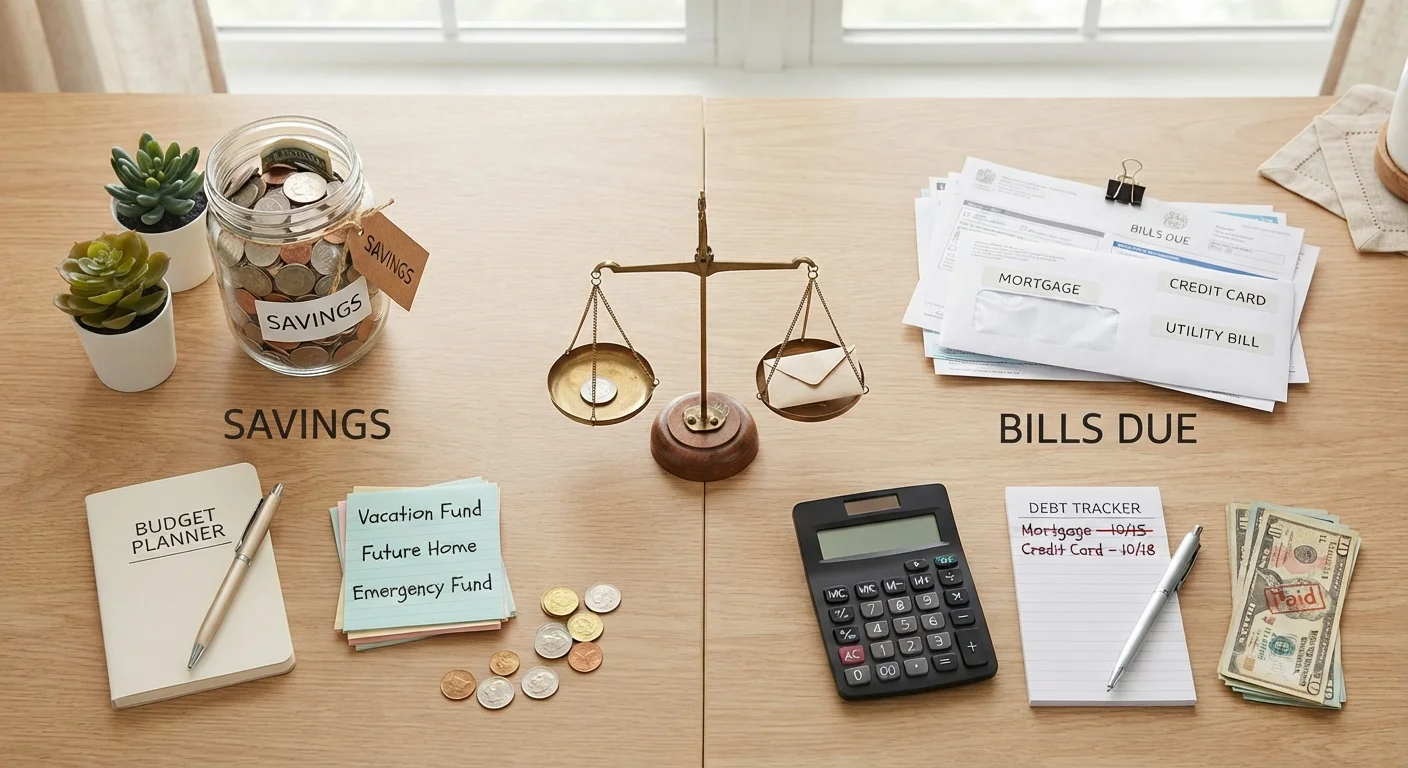
The Either/Or Trap - and Why It Can Backfire
The instinct to put every available dollar toward debt is understandable. If a credit card charges 22% interest, earning 4% in a savings account while carrying that balance looks like a losing trade on paper. But the math alone doesn't tell the whole story.
Households with no savings at all face a hidden risk: when a car repair, medical bill, or job disruption arrives - and at some point, one will - the only option left is to borrow. That often means going right back to the credit card you were working to pay off, potentially erasing months of progress in a single event.
This is what makes an all-or-nothing debt payoff strategy fragile for many people. It optimizes for the best-case scenario - no financial surprises - while leaving you exposed in the realistic scenario where something goes wrong. Understanding how compound interest works on both savings and debt is a useful foundation before deciding where to direct each dollar.
This Is General Education, Not Personal Advice
The frameworks in this article are educational starting points, not tailored recommendations. Interest rates, household income, job stability, debt types, and personal goals all affect what the right balance looks like for any individual. A licensed financial adviser can help you map a strategy to your specific numbers and circumstances.
When Doing Both at Once Actually Makes Sense
There are specific situations where maintaining savings contributions alongside debt payments is the financially sound choice - not just an emotional comfort:
- You have no emergency fund. Building a starter cushion of $500 to $1,000 before aggressive debt repayment reduces the chance that a single unexpected cost sends you back into deeper debt. Think of it as buying financial insurance.
- Your employer matches retirement contributions. A 401(k) match is one of the few guaranteed, immediate returns available in personal finance. If your employer matches 50 cents on every dollar up to 6% of your salary, walking away from that match to pay debt faster means leaving compensation on the table. Capture the full match before redirecting additional dollars to debt.
- Your income is unpredictable. Freelancers, contractors, and commission-based workers face income swings that make a savings buffer more essential than it might be for a salaried employee. A larger cash reserve justifies a slower debt payoff pace when income stability isn't guaranteed.
- Your debt carries a low interest rate. Federal student loans, some auto loans, and certain personal loans may carry rates low enough that the case for aggressive prepayment weakens. In this range, building savings and investing simultaneously can be mathematically reasonable.
For a framework to help distribute your income across competing goals, the 50/30/20 rule offers a starting structure worth reviewing.
Start With a Specific Savings Target
Rather than saving indefinitely while in debt, set a defined interim goal - such as $500 or $1,000 - and pause additional savings contributions once you hit it. This gives you a clear stopping point so you can redirect dollars to debt with confidence that a basic cushion is already in place.
When Debt Should Take Clear Priority
The split approach isn't always the right call. High-interest consumer debt - particularly credit card balances carrying rates above 18% to 22% - compounds aggressively. Every month you carry a balance, the cost of that debt grows. In these cases, keeping savings at a minimal emergency-buffer level and directing remaining discretionary income toward the debt is generally the more efficient path.
Two structured methods can guide repayment once you've decided to prioritize debt: the avalanche method (targeting the highest-interest balance first to minimize total interest paid) and the snowball method (clearing the smallest balance first to build momentum). See our comparison of avalanche vs. snowball debt payoff strategies for a detailed look at how each works.
It's also worth understanding the risks of the opposite extreme. Draining your savings entirely to pay off debt can feel freeing but may leave you financially exposed - a balance worth examining carefully.
56%
Americans unable to cover a $1,000 emergency from savings
According to Bankrate's annual emergency savings survey, more than half of U.S. adults could not pay for a $1,000 unexpected expense from savings alone, highlighting how common financial vulnerability is even among working households.
~$6,500
Average U.S. household credit card balance
Federal Reserve data and industry surveys consistently show average revolving credit card balances in the range of $6,000-$7,000 per indebted household, often carrying double-digit interest rates that compound monthly.
Nearly 1 in 4
Workers not capturing their full employer 401(k) match
Research from Vanguard and similar plan administrators has found that a meaningful share of eligible employees contribute below the threshold needed to receive their full employer match, effectively declining part of their compensation.
Building a Plan That Reflects Your Actual Situation
No single formula fits every household. The right balance between saving and debt repayment depends on your interest rates, income stability, access to credit, job security, and how close you are to retirement. These aren't variables a generic rule can fully account for.
A practical starting point: list every debt with its balance and interest rate, then identify your monthly cash flow after essential expenses. Ask two questions - Do I have any emergency savings at all? and Am I leaving employer retirement match money uncaptured? If the answer to either is no, those gaps are strong candidates for your first dollars.
Once a minimal buffer exists and any available match is captured, the surplus can tilt more heavily toward high-interest debt until it's eliminated. From there, savings goals can expand. This isn't a rigid sequence but a guideline - circumstances change, and the plan should too.
For a guided walkthrough of setting up both a savings and debt repayment plan from the beginning, see Personal Finance for Beginners: Building Your First Savings and Debt Plan. And if you want to make saving feel less effortful over time, habits that make saving a default behavior are worth building alongside any debt strategy.
This article is for general informational and educational purposes only and does not constitute personalized financial, investment, or tax advice. Please consult a licensed financial adviser or qualified professional before making decisions based on your individual circumstances.