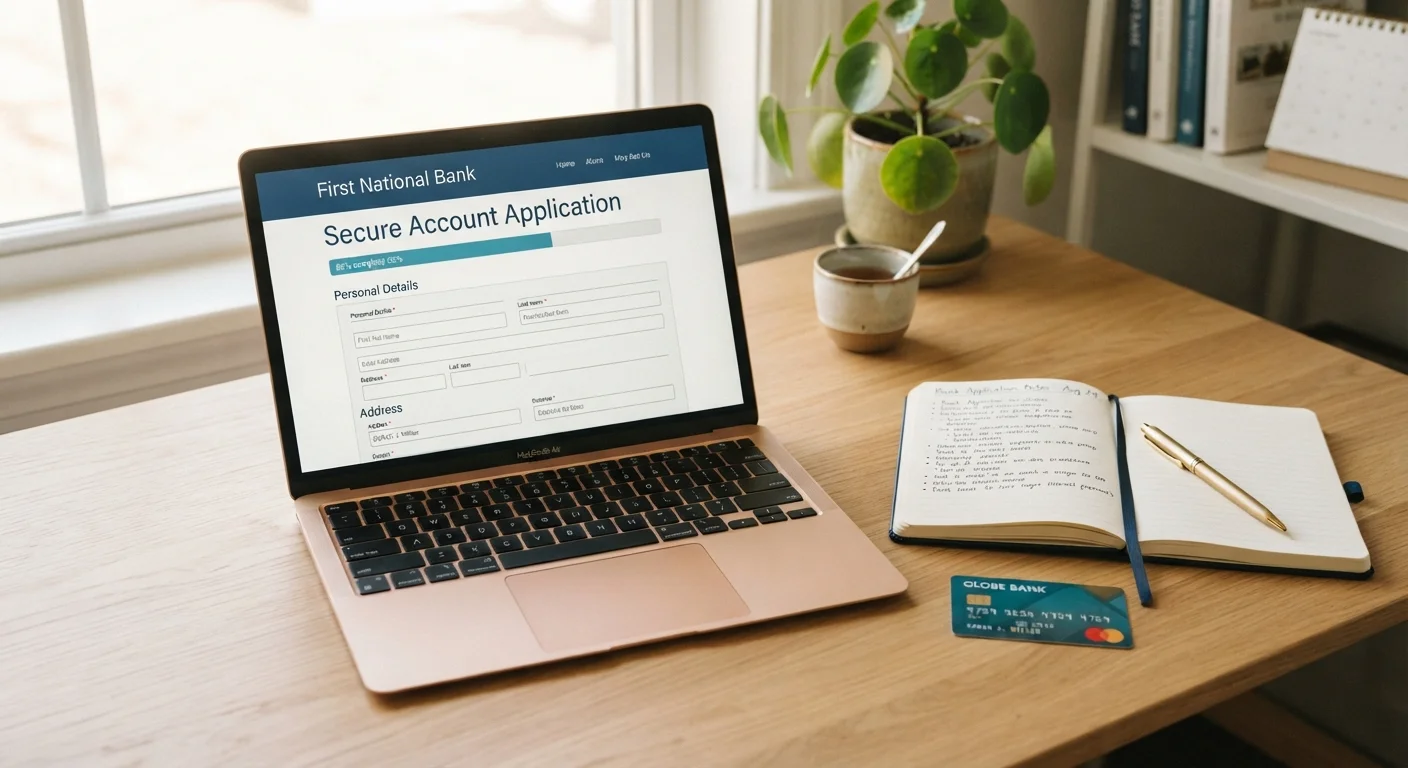
What to Know Before You Apply
Opening a bank account for the first time can feel unfamiliar, but the process is straightforward once you understand what to expect. Banks are regulated financial institutions, and federal law - primarily the Bank Secrecy Act - requires them to verify your identity before opening any account. This means every applicant must provide certain documentation, regardless of the institution.
It's also worth understanding what a bank account actually does for you: it provides a safe, insured place to hold money, a way to receive income, and a mechanism for paying expenses. Without one, everyday tasks like cashing checks, paying bills electronically, or setting up direct deposit become significantly harder.
What you will need
Before you start comparing options, think about how you'll use the account day-to-day. That decision shapes which account type - and which institution - is the right fit. Once you've opened your first account, you'll also be better positioned to build your first budget around your actual income and expenses.
Credit Unions Are Worth Considering
Credit unions are member-owned, not-for-profit institutions that often charge lower fees and offer more flexible account requirements than traditional banks. Membership eligibility varies - check whether you qualify through your employer, school, community, or a family member. The National Credit Union Administration (NCUA) insures deposits up to $250,000, just as the FDIC does for banks.
Tools and Documents You'll Need
Gathering your materials in advance makes the application process faster and reduces the chance of delays. The checklist below covers what most banks and credit unions require. Some institutions - particularly online banks - may have streamlined requirements, while others may ask for additional verification.
Government-Issued Photo ID
Required by federal law for identity verification when opening any bank account.
Social Security Number or ITIN
Used to verify your identity and comply with federal banking regulations.
Opening Deposit Funds
An initial deposit may be required to activate the account, though the amount varies widely.
Proof of Address
Some institutions request a utility bill or lease agreement to confirm your residential address.
Review All Fee Disclosures Carefully
Banks are required to provide a fee schedule before you open an account - read it in full. Monthly maintenance fees, overdraft fees, and minimum balance penalties can add up quickly. A well-labeled 'free' account may come with conditions attached. See our guide on what to verify before calling an account free before signing up.
If you're denied for an account due to your banking history, don't give up. Second-chance checking accounts are specifically designed for people in that situation and can help you re-establish a track record. After getting a foothold in the banking system, you may also want to explore how credit works - the two often go hand in hand when building financial stability from scratch.
Step-by-Step: Opening Your Account
Follow the steps below in order. Each one builds on the last, and skipping ahead - particularly the research and document-gathering stages - is the most common reason people run into avoidable problems.
Decide what type of account you need
Before choosing a bank, clarify what you need the account to do. A checking account is designed for everyday spending - paying bills, making purchases, and receiving direct deposits. A savings account is better suited for setting money aside and may earn interest over time. Many people open both. Our guide to checking vs. savings accounts explains the everyday differences in plain language.
Research and compare institutions
Look at traditional banks, online-only banks, and credit unions. Key factors to compare include monthly maintenance fees, minimum balance requirements, ATM access, overdraft policies, and whether deposits are insured by the FDIC (for banks) or NCUA (for credit unions). Both provide deposit insurance up to $250,000 per depositor, per institution.
Gather your required documents
Collect everything you'll need before starting the application - whether online or in person. At minimum, expect to provide: a government-issued photo ID, your Social Security number or ITIN, a current address, and contact information. Some institutions may also request a secondary form of ID or proof of address.
Complete the account application
Applications can typically be completed online, via a mobile app, or at a branch. You'll provide your personal information, agree to the account terms and fee disclosures, and in some cases undergo an identity verification step. Online applications often take 10-15 minutes. Read the terms carefully - you're entering a binding agreement.
Fund the account with an opening deposit
If your chosen institution requires an opening deposit, you'll transfer funds via an existing bank account, debit card, or cash (in-branch only). Some accounts have no minimum deposit requirement. Confirm the minimum before you apply so you're prepared. The deposit is typically available quickly, though transfer times from external accounts may vary.
Set up account access and security
Once approved, create or confirm your online banking login. Set up two-factor authentication if available - this adds a layer of protection against unauthorized access. Register your contact information for account alerts, which notify you of transactions, low balances, or suspicious activity. If you receive a debit card, activate it and memorize or store your PIN securely.
ChexSystems Reports Can Affect Eligibility
If you've had a bank account closed for unpaid overdrafts or suspected fraud, that history may appear in a ChexSystems report. Many banks check this report before approving new accounts. If you're denied, you may still qualify for a 'second-chance' checking account - a product specifically designed to help people rebuild their banking history.
Once your account is active, consider linking it to a savings goal. Our guide to building your first savings and debt plan walks through how to put your new account to work immediately.
This article is for general informational and educational purposes only and does not constitute personalized financial or legal advice. Account terms, fees, and eligibility requirements vary by institution. Consult a licensed financial professional for guidance specific to your situation.