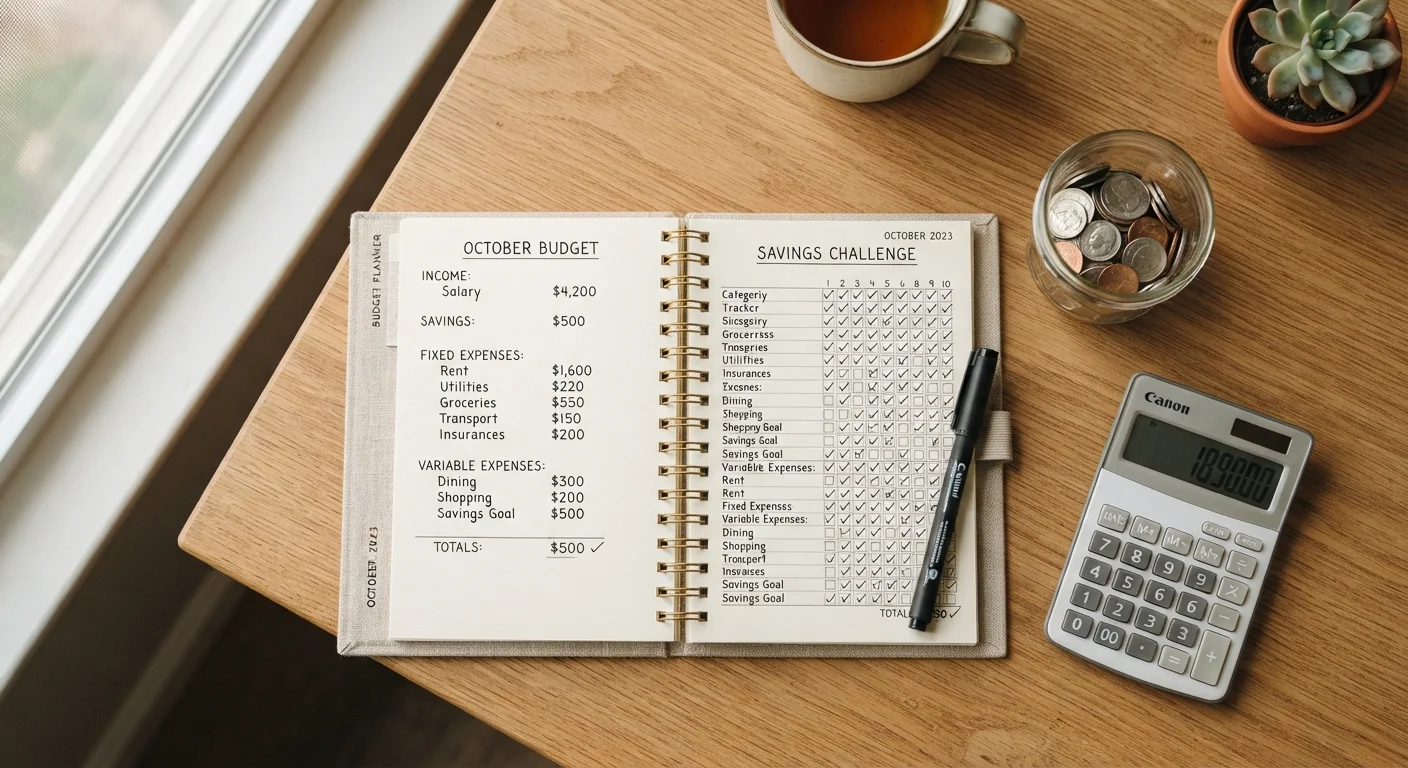
Why Saving and Debt Repayment Must Work Together
Most beginners face a version of the same dilemma: you have debt you want to erase, but you also know you should be saving money. The instinct to pick one and ignore the other is understandable - but it often leads to a frustrating cycle where an unexpected expense sends you straight back into debt.
The healthier approach treats saving and debt repayment as two sides of the same plan, not competing goals. The balance you strike depends on your specific debts, your income, and how much financial cushion you currently have. Saving while carrying debt is genuinely possible - and often the smarter move.
APR (Annual Percentage Rate)
The yearly cost of borrowing money, expressed as a percentage. A higher APR means a debt costs you more over time.
Emergency fund
Money set aside specifically to cover unexpected expenses - like a car repair or medical bill - so you do not need to borrow to handle them.
Minimum payment
The smallest amount your lender requires you to pay each month on a debt. Paying only the minimum keeps you current but extends how long it takes - and how much it costs - to pay off the balance.
Liquidity
How quickly and easily you can access your money. Cash in a savings account is highly liquid; money tied up in property is not.
Net worth
Your total assets (what you own) minus your total liabilities (what you owe). A simple measure of your overall financial position.
Step One: Know Exactly Where You Stand
Before you can build any plan, you need a clear snapshot of your finances. Grab a piece of paper or a simple spreadsheet and list the following:
- Monthly take-home income - what actually lands in your bank account after taxes.
- Essential monthly expenses - rent, utilities, groceries, transportation, insurance minimums.
- Every debt - lender, current balance, interest rate (APR), and minimum payment.
- Current savings balance - checking, savings, or any other liquid account.
Subtracting your total expenses and minimum debt payments from your income reveals your available dollars - the money you have left to direct toward savings or extra debt payments. If that number is negative or near zero, your first task is trimming expenses or increasing income before any savings plan is realistic.
For a structured walkthrough of this process, see how to build your first budget. Familiarizing yourself with basic financial vocabulary also helps - key terms in debt and savings is a useful reference.
Building Your Emergency Fund First
Before aggressively attacking debt, most financial educators recommend a small emergency fund - typically $500 to $1,000 for beginners. Here is the reason: without any savings buffer, a single unexpected car repair or medical bill forces you to borrow again, undoing the debt progress you worked hard to make.
Think of a starter emergency fund as protecting your debt payoff plan, not competing with it. Once it is in place and your high-interest debt is cleared, you can work toward the longer-term goal of three to six months of essential expenses in reserve.
Keep Your Emergency Fund Separate
Open a dedicated savings account just for your emergency fund - ideally at a different bank than your checking account. This small friction makes it less tempting to dip into the fund for non-emergencies. Even a free basic savings account works well for this purpose.
Keep your emergency fund in a separate savings account from your everyday checking. The small barrier of a separate account - plus the absence of a debit card tied to it - makes it easier to leave untouched for genuine emergencies.
Choosing a Debt Repayment Strategy
Once your starter emergency fund exists, extra money should generally go toward debt - but which debt first? Two frameworks dominate personal finance guidance:
- Debt Avalanche
- Pay minimums on all debts, then put every extra dollar toward the debt with the highest interest rate. This approach minimizes the total interest you pay over time.
- Debt Snowball
- Pay minimums on all debts, then target the smallest balance first regardless of rate. Paying off a smaller account quickly can build motivation to continue.
Neither method is universally superior - research suggests the best strategy is whichever one you will actually follow. If staying motivated is a challenge, the snowball's quick wins may matter more than the avalanche's mathematical edge.
Don't Ignore High-Interest Debt
Credit card interest rates are often well above 20% APR. Carrying a balance at that rate means the debt grows faster than almost any savings account can grow. Paying only the minimum on high-interest debt can cost significantly more over time than the original purchase. Make sure your plan addresses high-rate balances with urgency.
For guidance on credit scores and how debt behavior affects them, understanding credit from the ground up is a helpful companion read.
Splitting Your Dollars: A Simple Starting Framework
If your budget has some breathing room, a simple split can keep both goals moving. One widely cited budgeting structure allocates 50% of take-home income to needs, 30% to wants, and 20% to savings and debt repayment combined. That 20% bucket is where your savings contributions and extra debt payments live.
You do not need to follow this ratio exactly - it is a starting point, not a rule. What matters is that both savings and debt payoff receive a deliberate, recurring allocation each month, even if small. Automatic transfers on payday remove the temptation to spend that money before it is allocated.
For a more detailed approach to organizing your budget categories, building a budget that actually lasts offers practical next steps. The broader budgeting basics hub is also a strong resource to bookmark.
Habits That Keep the Plan on Track
A plan written once and forgotten rarely survives real life. These lightweight habits help keep your savings and debt goals intact month after month:
- Monthly check-in: Spend 15 minutes reviewing your balances and comparing spending to your plan. Catching drift early prevents bigger problems.
- Automate the boring parts: Set up automatic minimum payments on all debts to avoid late fees. Schedule a small automatic savings transfer the day after payday.
- Celebrate milestones: Paying off a credit card or reaching $500 saved are real achievements. Acknowledge them - it reinforces the behavior.
- Adjust without quitting: Life changes - income drops, expenses rise. Revise the amounts rather than abandoning the structure entirely.
Progress in personal finance is rarely linear. What matters is returning to the plan after setbacks rather than treating imperfection as failure.
This article provides general financial information for educational purposes only. It is not personalized financial, tax, or legal advice. For guidance specific to your situation, consult a qualified financial professional.