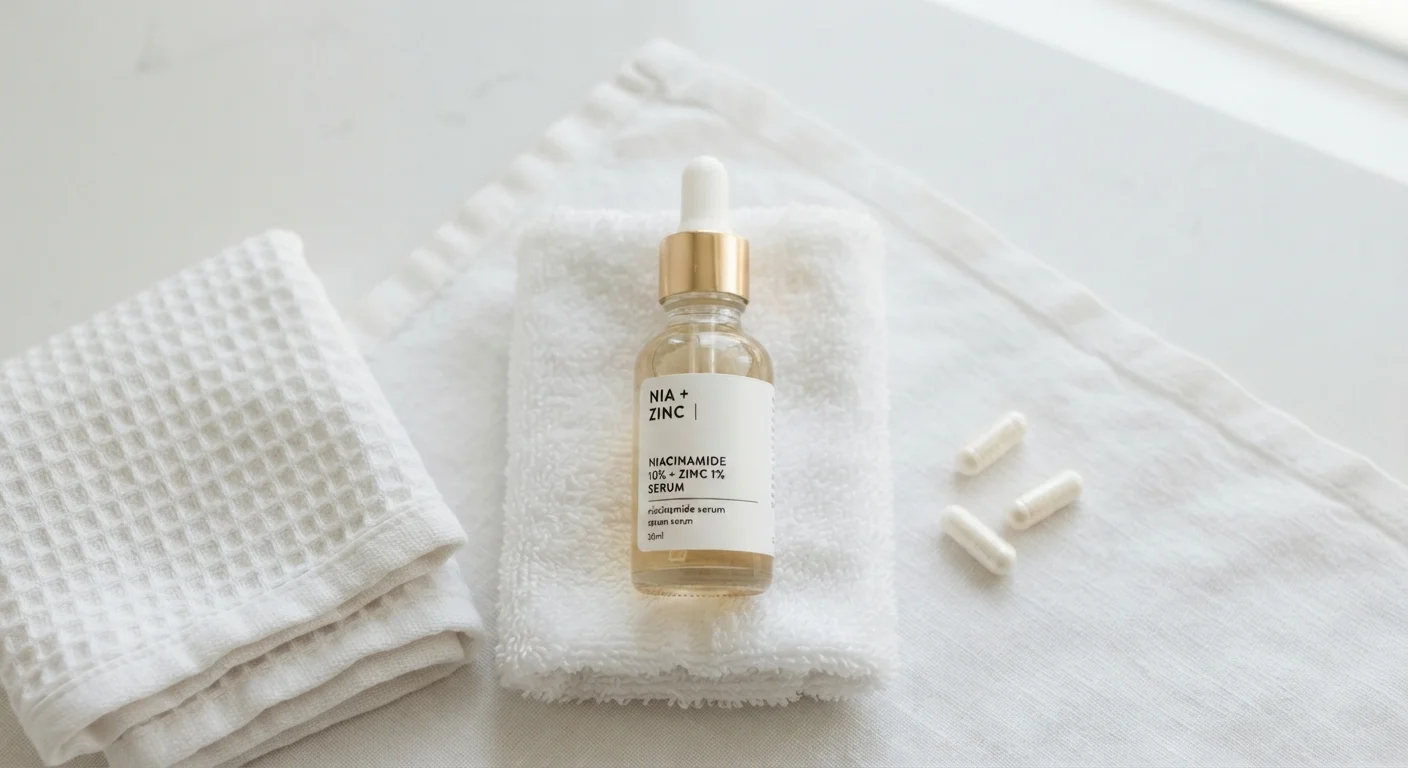
What Niacinamide Is - and What It Isn't
Niacinamide is a cosmetically active form of vitamin B3. It is water-soluble, stable across a wide pH range, and compatible with most other ingredients - three properties that make it unusually easy to formulate with. You'll find it in products marketed for pores, pigmentation, barrier support, and acne, sometimes all at once.
One important distinction: niacinamide is not the same as niacin (nicotinic acid), the oral supplement form of B3 that causes the characteristic skin flush in some people. Applied topically at typical product concentrations, niacinamide does not trigger that response in most users. If you see both "niacinamide" and "nicotinamide" on different labels, they refer to the same compound - cosmetic labeling conventions vary.
For a broader primer on reading ingredient lists, see our guide to decoding skincare ingredient labels.
Label Names Vary - Same Ingredient
"Niacinamide" and "nicotinamide" appear interchangeably on cosmetic ingredient lists in the U.S. and internationally. Both names describe the same compound. If you're tracking a product's concentration, either term counts toward the total amount of vitamin B3 in the formula.
Where the Evidence Is Solid
Three areas have the most consistent research support:
- Barrier function: Niacinamide stimulates production of ceramides and other lipids that make up the skin barrier. A stronger barrier retains moisture better and is more resistant to environmental irritants.
- Hyperpigmentation and uneven tone: It inhibits the transfer of melanin (pigment) from melanocytes to skin surface cells. Multiple clinical studies show measurable reduction in dark spots and overall tone irregularity with 4-5% concentrations over 8-12 weeks.
- Sebum regulation: Studies suggest niacinamide can reduce the rate of sebum excretion, which may reduce the appearance of enlarged pores and shine over time.
Its anti-inflammatory properties are also well-documented and explain why it is frequently used in formulations targeting acne-prone or sensitized skin.
2-5%
Concentration range used in most clinical studies
Peer-reviewed trials on niacinamide's effects on pigmentation and barrier function have predominantly used concentrations in this range.
8-12 weeks
Typical timeframe for visible pigmentation improvement
Multiple published studies on niacinamide and hyperpigmentation report measurable changes after eight to twelve weeks of consistent daily application.
~68%
Reduction in sebum excretion rate in one controlled study
A controlled trial published in the Journal of Cosmetic and Laser Therapy reported roughly a two-thirds reduction in sebum excretion rate with topical niacinamide versus placebo.
Where Claims Outrun the Evidence
Marketing language around niacinamide sometimes moves faster than the science. A few things worth treating with more skepticism:
- Very high concentrations: Products at 10%, 15%, or higher are sold as more powerful, but published studies generally used 2-5%. There's no robust clinical evidence that exceeding 5% delivers proportionally better outcomes - and some individuals report increased tingling at higher doses.
- Dramatic anti-aging claims: Some evidence supports niacinamide's role in supporting collagen indirectly, but calling it a wrinkle eraser overstates current research.
- Overnight transformation: Any ingredient that measurably changes pigmentation or pore appearance requires weeks of consistent use. Single-session or week-long results claims are not credible.
For context on how ingredient claims work across the industry, the Beauty Ingredient Glossary covers the language you'll encounter most.
How to Use Niacinamide in a Routine
Because niacinamide is water-soluble and pH-flexible, it slots into most routine steps without conflict. A few practical notes:
Starting Out: Keep It Simple
If you're new to niacinamide, start with a single product - a serum or moisturizer - at a 4-5% concentration rather than layering multiple niacinamide products. Give it at least eight weeks before evaluating results. Adding it in the morning leaves your evening routine free for other actives like retinoids.
- Layering with actives: The old claim that niacinamide and vitamin C form a harmful compound (nicotinic acid) when mixed is chemically possible but requires conditions - concentration, temperature, extended contact - not present in normal skincare use. Routine layering is considered safe.
- With retinoids: Niacinamide can be applied in the same routine as retinol or prescription retinoids. Some evidence suggests it may help buffer the irritation those ingredients commonly cause.
- Frequency: Most products are formulated for once or twice daily use. There's no well-established benefit to using it more frequently.
This article provides general skincare information for educational purposes and is not a substitute for advice from a qualified dermatologist or healthcare professional. If you have a skin condition, consult a licensed provider before adding new ingredients to your routine.