Why Skincare Doesn't Have to Be Complicated
Walk into any beauty aisle and you'll see serums, essences, toners, exfoliants, facial oils, and masks - each promising something different. It's easy to assume a good skincare routine requires all of them. It doesn't.
Most dermatological guidance points to the same core principle: consistency with a few well-chosen steps outperforms an elaborate routine used inconsistently. The beauty industry has a commercial incentive to sell you more products. Your skin's actual needs are more modest.
This guide focuses on what you genuinely need to start, what the ingredients actually do, and how to build from there without causing problems along the way.
Skin barrier
The outermost layer of skin that controls moisture retention and protects against environmental irritants. Keeping it intact is the primary goal of a basic routine.
Broad-spectrum SPF
A sunscreen designation meaning it protects against both UVA (aging) and UVB (burning) rays. Both types contribute to long-term skin damage.
Humectant
An ingredient that attracts and holds water molecules, helping to hydrate skin. Glycerin and hyaluronic acid are common examples.
Ceramides
Naturally occurring lipids (fats) in the skin barrier. Skincare products with ceramides help reinforce the barrier, particularly if it's been compromised.
Active ingredient
An ingredient with a documented, specific effect on the skin - such as exfoliating, reducing pigmentation, or stimulating cell turnover. Actives require more care in how and when they're used.
Fragrance-free
A product label indicating no added fragrance compounds. Different from 'unscented,' which may still contain masking fragrances. Generally a safer starting point for unknown skin types.
The Three Non-Negotiables
Before adding anything else, get these three steps working reliably:
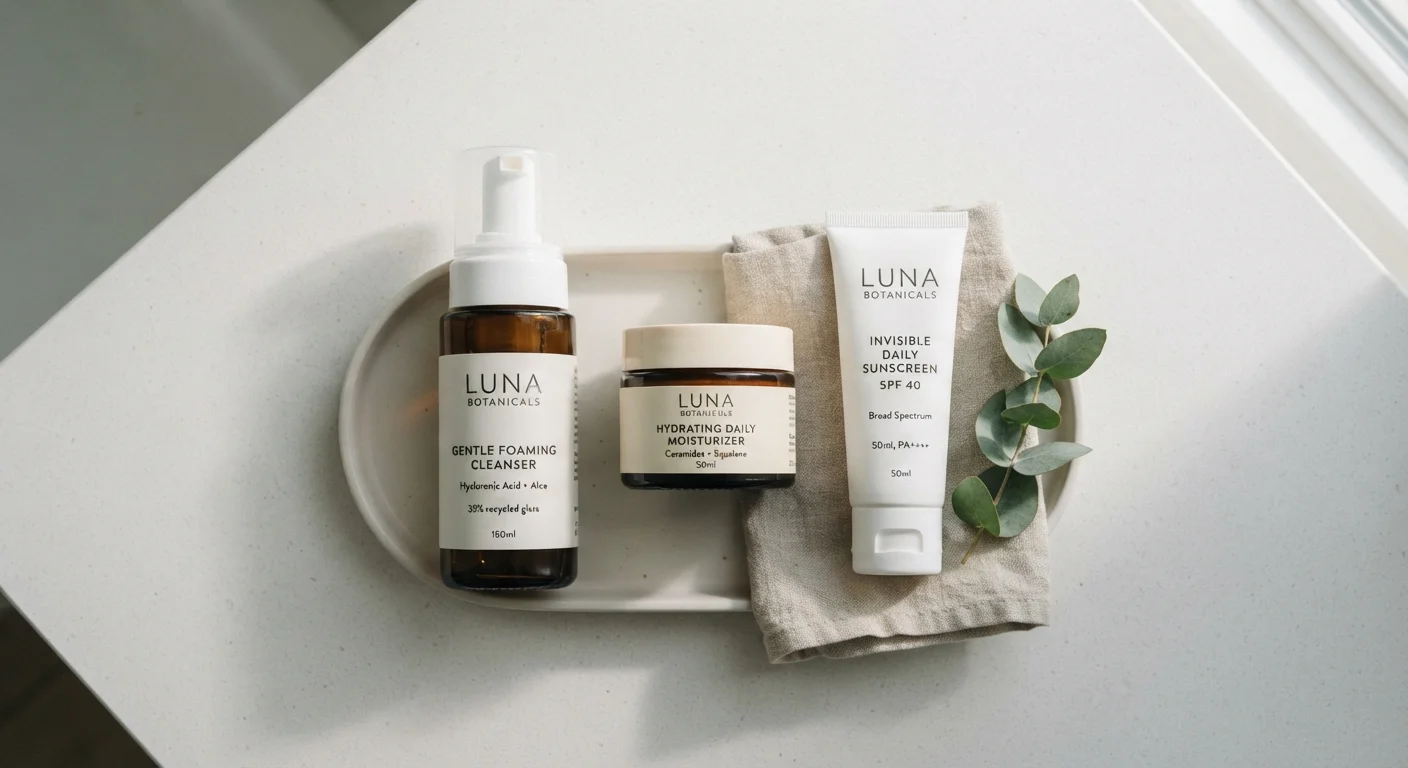
- Cleanser: Removes dirt, excess oil, and environmental residue. Look for a gentle, non-stripping formula. If your skin feels tight or squeaky-clean after washing, the cleanser is too harsh. A comfortable, slightly neutral feeling is the goal.
- Moisturizer: Helps your skin's barrier function by reducing water loss. This step matters for all skin types, including oily - dehydration and oiliness are different problems. Look for ingredients like glycerin or hyaluronic acid, which draw moisture in, and ceramides, which help seal it.
- Sunscreen: The most evidence-backed step in any routine. Broad-spectrum SPF 30 or higher, applied every morning, is the single most impactful thing you can do for long-term skin health. UV exposure is cumulative and ongoing - indoors and outdoors.
These three steps, applied consistently morning and night (with sunscreen only in the AM), form a complete foundational routine.
Start with one routine, not two
Rather than building separate AM and PM routines from the start, nail a single consistent routine first. Once cleanse-moisturize-SPF feels automatic, it's easier to adjust timing and add steps thoughtfully. Our article on morning vs. evening skincare explains when splitting makes sense.
Reading an Ingredient Label Without a Chemistry Degree
Cosmetic ingredient lists are required by the FDA to be listed in descending order of concentration. That means the first five ingredients make up the bulk of what you're putting on your face. Everything further down the list is present in smaller amounts - often under 1%.
A few things to look for:
- Fragrance (parfum): One of the most common causes of skin irritation. Listed as a single ingredient even when it contains dozens of compounds. Beginners with unknown skin sensitivities may want to start fragrance-free.
- Alcohol denat. (denatured alcohol): High concentrations can disrupt the skin barrier over time. Not the same as fatty alcohols like cetyl or stearyl alcohol, which are actually moisturizing.
- Active ingredients: Terms like niacinamide, retinol, salicylic acid, or vitamin C describe ingredients with documented functional effects. Their position in the list gives you a rough sense of how much is actually present.
You don't need to memorize every ingredient. A basic understanding of what to look for - and what to avoid early on - goes a long way.
What You Can Skip (For Now)
Here's what you don't need as a beginner:
- Toner: Traditional toners were astringents designed to remove soap residue. Modern gentle cleansers make that unnecessary. Some hydrating toners add value later, but they're not essential to start.
- Exfoliants: Chemical exfoliants (AHAs, BHAs) and physical scrubs can be useful, but they're also where beginners most commonly over-do it. Over-exfoliation damages the skin barrier, causing redness, sensitivity, and breakouts - the opposite of what you want.
- Targeted serums: Vitamin C for brightness, retinol for cell turnover, niacinamide for pores - these have real uses, but they're layer two. Build a stable foundation first.
- Eye cream: Most eye creams contain the same ingredients as regular moisturizers in smaller, more expensive packaging. A gentle moisturizer used carefully around the eye area works for most beginners.
Skipping these isn't cutting corners - it's starting smart. You'll also have a clearer picture of what's working when your routine is simple.
More steps doesn't mean better results
A common beginner mistake is using too many products at once in hopes of faster results. Layering multiple actives without understanding how they interact can irritate or compromise the skin barrier. If your skin starts feeling worse after adding products, the fix is usually subtraction, not addition.
How to Add Products Without Causing Problems
Once your three-step routine feels stable - no irritation, no new breakouts, skin feels comfortable - you can start adding. The rule is straightforward: one new product at a time, with two to four weeks between introductions.
This timeline lets you identify what's causing a reaction if one occurs. Introducing three new products in the same week makes it impossible to know which one is responsible.
When you're ready to expand, consider the layering order carefully. Products go on thinnest to thickest, and some ingredient combinations work against each other - retinol and vitamin C, for example, are often better used at different times of day. Our skincare layering order guide breaks down the logic behind sequencing in detail.
If your skin reacts frequently or unpredictably, a more cautious approach to ingredient selection may help. See our guide to building a routine for sensitive skin for a slower, more structured path.
This article is for general informational purposes only and is not a substitute for advice from a qualified dermatologist or healthcare provider. If you have a skin condition or persistent concerns, consult a licensed professional.