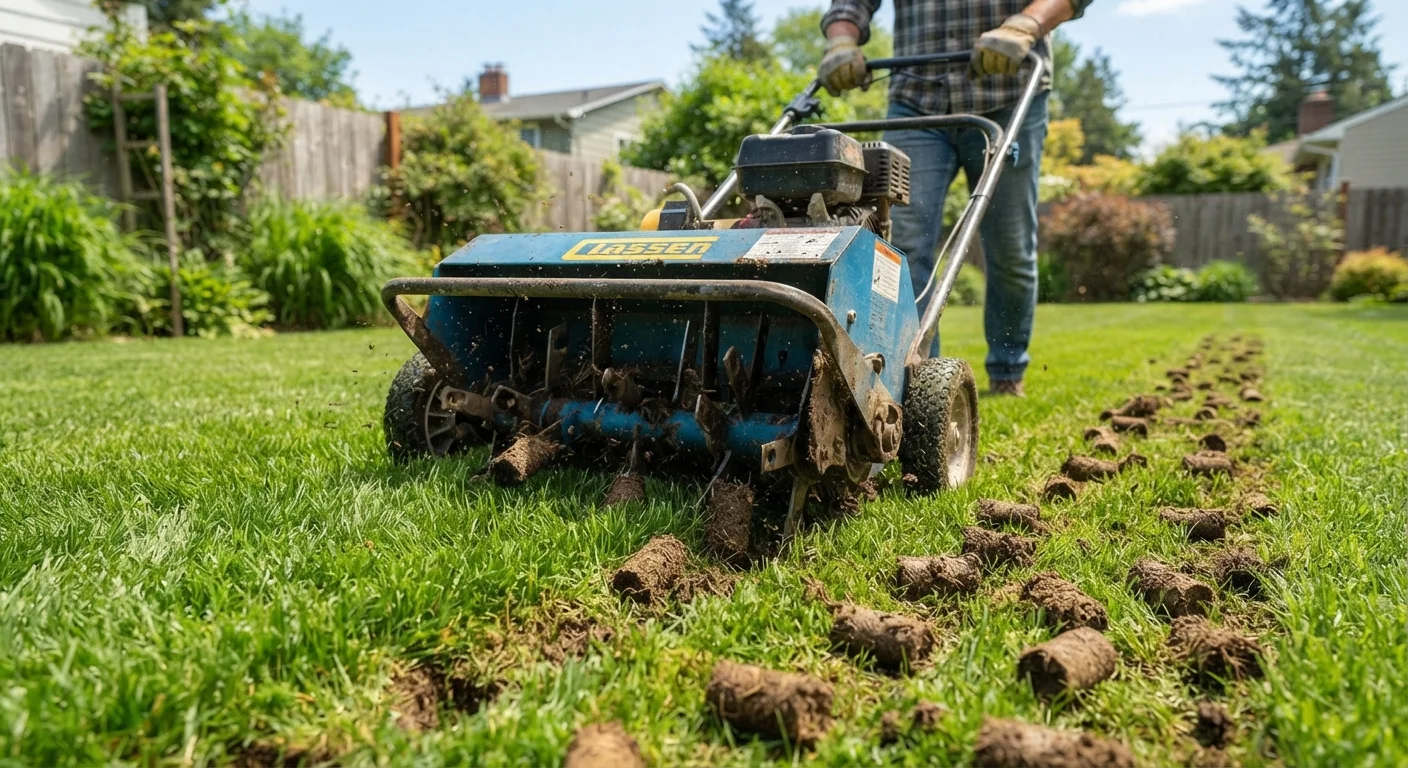
What Aeration Actually Does
Lawn aeration is the process of perforating the soil with small holes to reduce compaction and allow air, water, and nutrients to penetrate down to the root zone. The most effective method - core aeration - uses hollow tines to pull out cylindrical plugs of soil roughly 2-3 inches deep, which are left on the surface to break down naturally. A second method, spike aeration, uses solid tines to poke holes without removing material; it is less effective and can sometimes worsen compaction around each hole.
Soil compaction squeezes out the pore spaces that roots depend on for oxygen and water uptake. When those pores are restricted, grass struggles to establish deep roots, making it more vulnerable to drought, disease, and heavy use. Aeration directly addresses this by physically opening up the soil profile. It also helps when a thick layer of thatch - the mat of dead stems and roots between the grass and soil - is blocking water and fertilizer from reaching the ground.
See our guide to soil pH and nutrients for more context on how soil health affects plant performance.
When to Aerate - and When to Skip It
Timing matters as much as technique. Aerating at the wrong growth stage stresses grass rather than helping it recover.
- Cool-season grasses (Kentucky bluegrass, tall fescue, ryegrass): Aerate in early fall, when temperatures are moderate and the grass is actively growing. This gives turf the entire fall season to fill in aeration holes before going dormant.
- Warm-season grasses (Bermuda, zoysia, St. Augustine): Aerate in late spring to early summer, just after the lawn enters its primary growth phase.
You can often skip aeration entirely if your lawn has sandy or loamy soil that drains well, if it receives minimal foot traffic, or if it was established within the past year. Newly seeded or sodded lawns need time for roots to knit before being disturbed.
A simple test to check whether your lawn actually needs it: push a screwdriver into the soil. If it penetrates 6 inches without much resistance, compaction is not your problem. If it stops at 2-3 inches, aeration is worth considering. You can also pair timing decisions with your seasonal lawn care calendar to avoid conflicting with overseeding or fertilizing windows.
Spike vs. Core Aeration: Know the Difference
Spike aerators use solid tines to push holes into the soil without removing material. While they are cheaper and easier to find, they can actually increase compaction in the soil immediately surrounding each hole. Core (plug) aeration, which removes small cylinders of soil, is consistently recommended by turf management professionals as the more effective option for relieving compaction. If you are renting equipment or hiring a service, confirm which method is being used.
Pros and Cons of Lawn Aeration
Aeration offers real benefits under the right conditions - but it also carries trade-offs worth understanding before you commit.
Reduces soil compaction in high-traffic areas
Compacted soil restricts root growth and limits water infiltration. Core aeration physically opens the soil profile, giving roots room to spread and access resources.
Improves water and fertilizer absorption
Holes created by aeration allow irrigation and rainfall to penetrate rather than run off. Fertilizer applied after aeration reaches roots more directly, potentially reducing waste.
Helps break down excess thatch
Aeration introduces soil microbes to the thatch layer, accelerating its decomposition. This is particularly useful when thatch exceeds half an inch in depth.
Creates better conditions for overseeding
Open holes improve seed-to-soil contact dramatically, which is one of the most important factors in germination success when overseeding thin or bare patches.
Supports deeper, more drought-tolerant root systems
Loosening compacted soil allows roots to grow downward rather than spreading shallowly near the surface, which generally improves the lawn's resilience during dry spells.
Temporary cosmetic disruption to the lawn
Soil plugs scattered across the surface look messy for one to two weeks after aeration. Most homeowners find this acceptable, but it is worth anticipating before an event or gathering.
Not effective for all lawn problems
Aeration addresses compaction and thatch - not nutrient deficiencies, disease, poor drainage from grade issues, or improper watering. Misdiagnosing the problem leads to wasted effort.
Can encourage weed germination
Open holes and disturbed soil create opportunities for weed seeds to establish. This is manageable with overseeding and appropriate timing, but it is a real trade-off.
Equipment rental or hire adds cost
Core aerators are not common household tools, so most homeowners must rent equipment or pay for professional service. The cost is modest but not zero, making it worth confirming the need first.
Wrong timing can stress the lawn
Aerating during drought conditions, summer heat stress, or dormancy can damage grass rather than help it. Timing to active growth periods is essential for the process to be beneficial.
For lawns that struggle with standing water after rain, thin patches in high-traffic areas, or fertilizer that seems to roll off rather than absorb, aeration is typically worthwhile. For a lawn that is already green, dense, and draining normally, it introduces unnecessary disruption.
If your lawn's issues stem from nutrient deficiencies or irregular watering rather than compaction, those problems are better addressed directly. Our article on how much to water your lawn is a good starting point for ruling out moisture-related causes.
½ inch
Thatch depth that typically warrants aeration
Lawn care educators generally recommend aeration when thatch layers exceed half an inch, as greater depth blocks water and nutrient penetration.
2-3 inches
Typical core depth achieved by quality aerators
Effective core aeration reaches at least 2-3 inches into the soil; shallower penetration reduces the benefit, particularly in heavily compacted ground.
Getting the Most Out of Aeration
If you decide aeration is the right move, a few practical steps improve results significantly.
- Water the lawn the day before. Moist soil allows tines to penetrate deeper. Dry, hard ground limits how far the tines go and reduces effectiveness.
- Make multiple passes. Running the aerator in two directions - perpendicular to each other - increases the number of holes and improves coverage.
- Leave the plugs. The cores pulled from the soil look untidy for a week or two, but they contain beneficial microbes and organic matter. Let them break down on their own rather than raking them up.
- Overseed immediately after. Open holes provide direct seed-to-soil contact, making post-aeration overseeding significantly more effective than seeding on an intact surface.
- Fertilize the same week. Nutrients applied after aeration reach the root zone more efficiently while channels are open.
If you prefer not to rent or buy equipment, manual plug aerators work reasonably well for small areas. For lawns over a few thousand square feet, a walk-behind or tow-behind core aerator is far more practical. You can also hire a lawn care service - just verify they use core (not spike) aeration before scheduling.