Why pH Is the Gatekeeper for Plant Nutrition
You can spend money on fertilizer, amend your soil, and water consistently - and still watch plants sputter if your pH is off. That's because pH doesn't just describe your soil chemistry; it controls it. At the wrong pH, nutrients that are physically present in the soil become chemically unavailable to plant roots. The plant starves even in rich soil.
The connection to fertilizer is especially important. If your pH is too low, phosphorus locks up and becomes inaccessible. If it's too high, iron, manganese, and zinc become scarce. Understanding pH is what separates gardeners who apply fertilizer effectively from those who pour money into the ground with little to show for it. Our guide to reading fertilizer labels pairs well with this - knowing your N-P-K ratios matters a lot less if your pH prevents uptake.
6.0-7.0
Optimal pH range for most garden plants
Cooperative extension programs across the U.S. consistently cite this range as the target for the broadest nutrient availability in garden and lawn soils.
4.5-5.5
pH range preferred by blueberries and azaleas
These acid-loving plants are among the most pH-sensitive common garden species, requiring soil well outside the typical neutral range.
10x
Acidity difference between each pH unit
Because the pH scale is logarithmic, a soil at pH 5 is ten times more acidic than one at pH 6 - a small number shift represents a large chemical change.
The pH Scale in Plain Terms
The 0-14 scale can feel abstract, but for practical gardening purposes you're mostly concerned with a narrow band. Here's how to think about it:
- Below 6.0 (acidic): Common in high-rainfall areas and wooded regions. Blueberries, azaleas, and rhododendrons thrive here, but most vegetables and grasses struggle.
- 6.0-7.0 (mildly acidic to neutral): The sweet spot for most lawn grasses, vegetables, and ornamentals. Nutrient availability peaks in this range.
- Above 7.0 (alkaline): Common in arid climates or areas with limestone-rich parent rock. Iron chlorosis - yellowing leaves with green veins - is a telltale sign plants are struggling in alkaline soil.
Because the scale is logarithmic, the difference between 5.5 and 6.5 is not one unit - it's a tenfold shift in acidity. Small number changes represent significant real-world differences in soil chemistry.
Test Before You Amend
Never add lime or sulfur based on guesswork. Over-correction is a real risk - pushing pH too far in either direction causes its own problems. A $15 soil test from your cooperative extension office gives you a precise starting point and often includes a tailored amendment recommendation, saving both money and time.
How to Test and What to Do With the Results
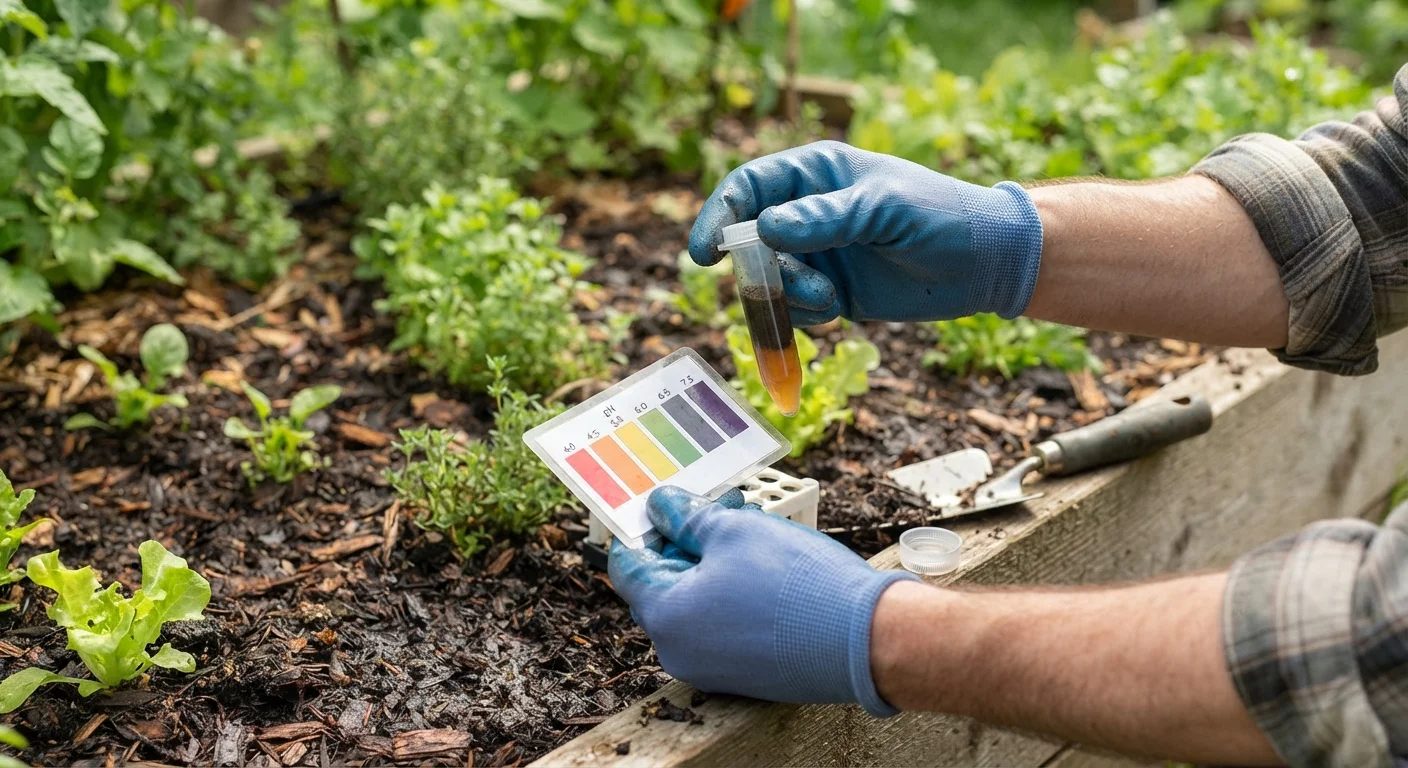
A visual inspection of your garden won't tell you your pH. You need to test. Options range from home test kits (inexpensive, good for a general read) to professional lab tests through your local cooperative extension service. Lab tests typically cost under $20 and return detailed results along with amendment recommendations - well worth it before a major planting effort.
Once you have your number, the path forward depends on direction:
- Too acidic (below target):
- Add ground limestone. Calcitic lime raises pH and adds calcium; dolomitic lime also adds magnesium. Application rates vary by soil texture - clay soils buffer change more than sandy ones, requiring more amendment to move the needle.
- Too alkaline (above target):
- Elemental sulfur is the most common fix. It works slowly as soil bacteria convert it to sulfuric acid. Regular additions of compost also help over time.
Retest six to eight weeks after amending, and again before each growing season. pH drifts - it's not a one-and-done fix. If you're starting a vegetable garden from scratch, testing before you plant gives you the most leverage to correct conditions early.
pH in Practice: What Different Plants Actually Need
Not every plant wants the same soil. Matching pH to what you're growing prevents a lot of frustration.
For lawn care, most cool-season grasses - fescue, bluegrass, ryegrass - prefer 6.0 to 7.0. Warm-season grasses like bermuda and zoysia are similar. Aeration combined with lime application is a common approach when lawn pH is low; see our article on lawn aeration for how the two practices can work together.
One thing to keep in mind: common gardening advice about quick pH fixes often oversimplifies the chemistry. Our look at common garden myths covers several popular ideas - like coffee grounds rapidly acidifying soil - that don't hold up under scrutiny.
This article is for general informational and educational purposes only. Soil amendment practices can vary significantly based on local conditions. Consult your local cooperative extension service or a certified horticulturist for guidance specific to your region and soil type.