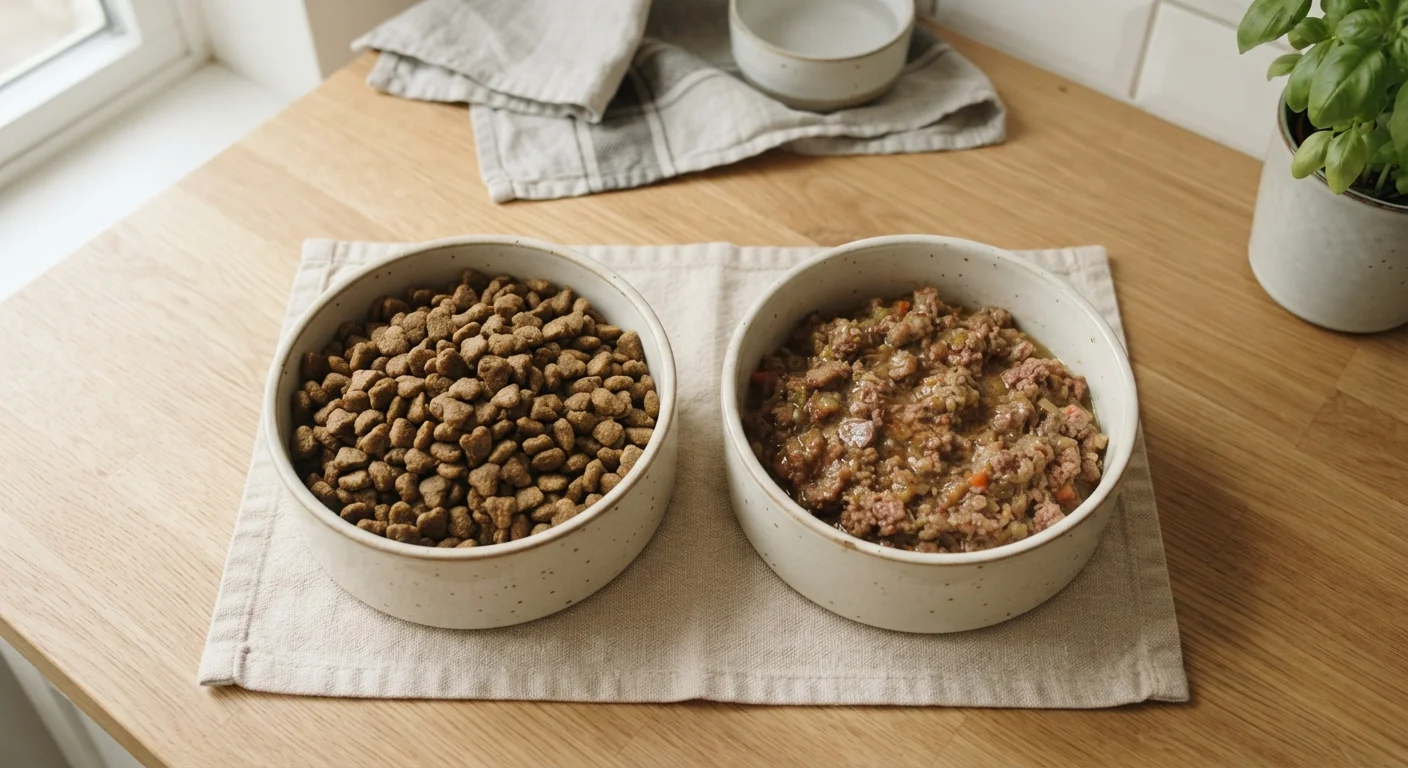
The Core Difference: Moisture, Not Marketing
Walk down any pet food aisle and the packaging makes both kibble and canned food sound equally essential. The real distinction isn't branding - it's water. Dry food typically contains around 6-10% moisture; wet food sits between 70-80%. That gap has meaningful downstream effects on digestion, hydration, caloric intake, and long-term organ health.
Both formats can meet the nutritional standards set by the Association of American Feed Control Officials (AAFCO) - the body that establishes minimum nutrient profiles for commercially sold pet food in the U.S. When a product carries an AAFCO statement indicating it is "complete and balanced," it means the food provides all essential nutrients at appropriate levels for the stated life stage. Understanding what's on that label matters more than the format itself. For a deeper look at how life-stage labeling works in practice, see how AAFCO life-stage labels affect your choice.
| Criterion | Dry Food (Kibble) | Wet Food (Canned) |
|---|---|---|
| Moisture content | ~6-10% | ~70-80% |
| Caloric density (per cup volume) | High | Low to moderate |
| Palatability | Moderate | Generally higher |
| Storage after opening | Weeks in sealed container | 1-3 days refrigerated |
| Cost per serving (general) | Lower | Higher |
| Dental mechanical cleaning | Minimal benefit (limited evidence) | No mechanical benefit |
| Suitable for low-thirst pets | Less ideal | Well suited |
| Works with auto-feeder | Yes | Generally no |
How Health Conditions Should Shift Your Decision
For most healthy adult pets on a balanced diet, either format can work. The choice becomes more consequential when a specific health condition is present.
Urinary and Kidney Health
Cats are obligate carnivores that evolved in arid environments - their thirst drive is naturally low, and they tend to derive most of their fluid intake from prey. Domestic cats eating exclusively dry food may chronically consume less water than is ideal, which can contribute to urinary crystal formation and, over time, stress kidney function. Wet food's high moisture content can meaningfully increase a cat's daily fluid intake without requiring them to drink more water voluntarily. For a species-specific breakdown, explore the nutritional trade-offs between wet and dry food for cats.
Weight Management
Dry food is calorie-dense: a cup of kibble often delivers two to four times the calories of an equivalent volume of wet food. Pets prone to overeating may feel more satisfied on wet food simply because they consume more physical volume per calorie. That said, portion control is achievable with either format - the key is measuring by calories, not by cup or can.
Dental Health
A common claim is that kibble mechanically cleans teeth. The evidence for this is limited for most standard kibble shapes and sizes. Pets with dental disease or post-extraction pain almost always do better on wet food for comfort reasons. For healthy pets, neither format replaces dedicated dental care such as brushing or veterinarian-approved dental chews.
Transitioning Between Food Types
Switching from dry to wet food (or vice versa) too quickly can cause digestive upset in many pets. Most veterinarians recommend a gradual transition over 7-10 days, incrementally increasing the new food while decreasing the old. Pets with sensitive stomachs may need a longer transition period. Always monitor stool consistency and appetite during any diet change.
As pets age, their nutritional needs shift considerably. If your pet is entering senior years, learn how protein, phosphorus, and caloric needs change in older dogs and cats before adjusting their diet.
Practical Feeding: Mixing Formats and Watching for Signs
Many veterinarians support a mixed-feeding approach - dry food as a daily base supplemented with wet food for hydration and palatability. If you go this route, be careful with total daily calorie math: both portions count toward the daily intake target. A common mistake is treating the wet food as a treat on top of a full kibble serving, which can lead to gradual weight gain.
Whatever format you use, watch your pet's body condition score - a structured way veterinarians assess whether an animal is underweight, at ideal weight, or overweight by evaluating fat coverage over ribs and spine. Your vet can show you how to assess this at home. You can also use a nutrition checkup checklist covering coat, energy, digestion, and weight indicators to track whether the current diet is working.
70-80%
Moisture in canned pet food
Compared to roughly 6-10% in dry kibble, this difference significantly affects daily fluid intake, particularly for cats with low voluntary water consumption.
~4x
Caloric density gap by volume
A cup of dry kibble can deliver up to four times the calories of an equivalent volume of wet food, making portion measurement critical when mixing formats.
If you're ever considering departing from commercial food entirely, understand that homemade diets carry real nutritional risks. Homemade pet food frequently misses critical nutrients that are difficult to replicate without professional formulation.
This article is for general informational and educational purposes only. It is not a substitute for personalized veterinary advice. Always consult a licensed veterinarian before making significant changes to your pet's diet, especially if your pet has a known health condition.