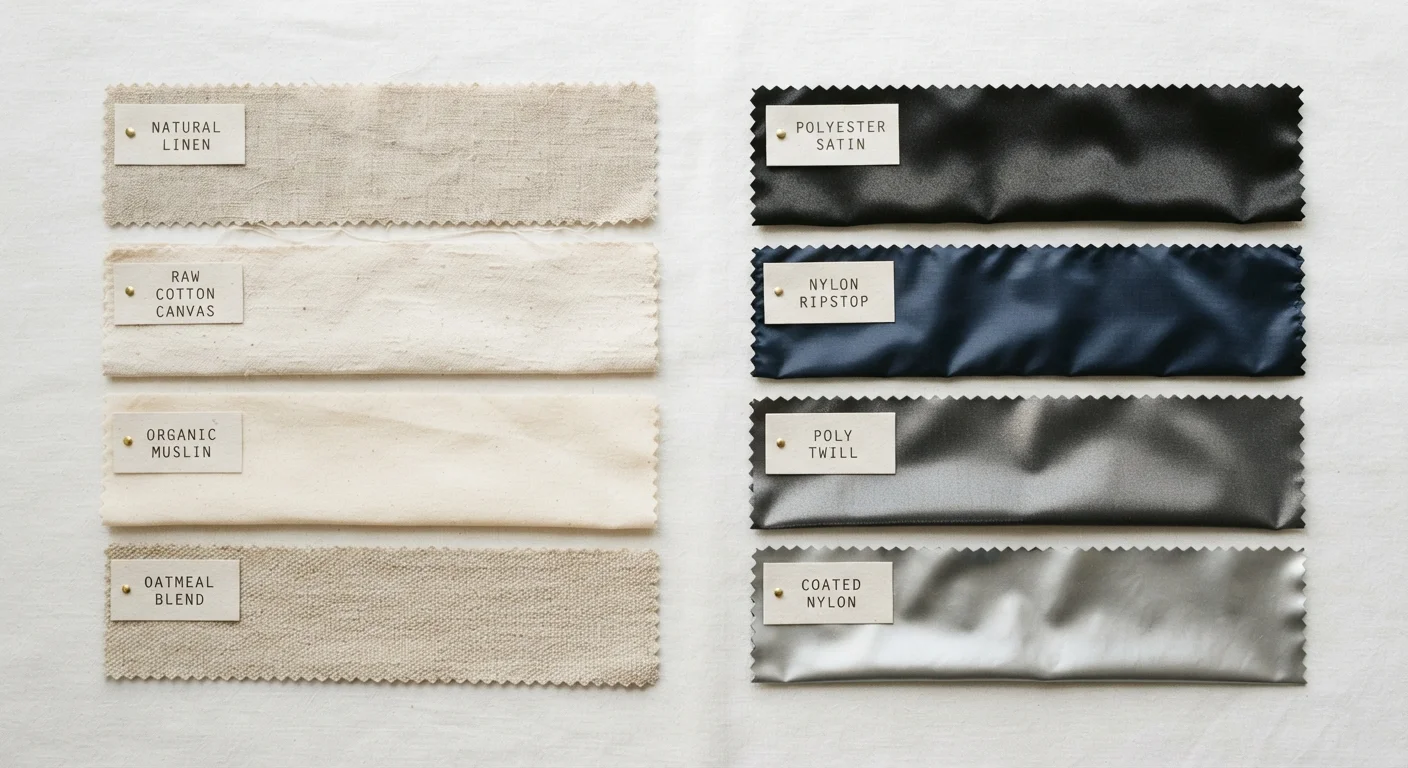
What Makes a Fabric Natural or Synthetic
The terms refer to origin. Natural fabrics are made from fibers that come directly from plants or animals - cotton from cotton plant bolls, linen from flax stalks, wool from sheep's fleece, silk from silkworm cocoons. Synthetic fabrics are manufactured from petrochemical compounds processed into fibers: polyester, nylon, acrylic, and spandex are the most common examples.
A third category - semi-synthetic or regenerated fabrics - sits in between. Viscose (also called rayon), modal, and lyocell (often sold as Tencel) are made from natural cellulose sources like wood pulp, but require heavy chemical processing to become wearable fiber. They share some properties with natural fabrics but behave differently in care and durability.
Understanding which category a garment falls into is the starting point for knowing how it will perform - and how to care for it. Fabric care habits are much easier to build when you understand what a material actually needs.
How Each Type Performs Day-to-Day
Performance comes down to four practical factors: breathability, moisture handling, durability, and care requirements.
| Criterion | Natural Fabrics | Synthetic Fabrics |
|---|---|---|
| Breathability | High - air circulates through fiber | Low - traps heat against skin |
| Moisture handling | Absorbs moisture into fiber | Wicks or repels moisture |
| Durability | Moderate - thins with heavy use | High - resists abrasion and stress |
| Wrinkle resistance | Low - wrinkles easily (especially linen) | High - holds shape through washing |
| Shrink risk | High - especially with heat or agitation | Low - stable in most conditions |
| Odor retention | Low - releases odor in the wash | High - synthetic fibers trap bacteria |
| Ease of care | Moderate - sensitive to heat and agitation | High - machine washable, fast-drying |
| Environmental footprint | Varies - water and pesticide use in farming | Varies - petroleum-based, sheds microplastics |
Breathability: Natural fibers have microscopic structures that allow air to circulate, which is why cotton and linen feel cooler in warm weather. Synthetics generally do not breathe in the same way - they sit against the skin and can trap heat. The exception is synthetics engineered with moisture-wicking technology, common in performance wear.
Moisture handling: Cotton absorbs moisture into the fiber, which keeps you comfortable briefly but means the garment stays damp longer. Polyester and nylon repel moisture or move it to the fabric's outer surface to evaporate - useful during exercise, less comfortable in everyday heat.
Durability: Synthetic fibers are generally stronger and more resistant to physical stress. Nylon is one of the most abrasion-resistant fibers available, which is why it's used in bags, outerwear, and hosiery. Cotton and linen will eventually thin and pill with heavy use, though quality construction and proper care extend their life significantly. Construction details like seam allowance and stitch density affect durability just as much as fabric type.
Care requirements: Natural fabrics are more sensitive to heat, agitation, and improper drying - cotton shrinks, linen wrinkles, wool felts. Synthetics are more forgiving in the wash but should not be dried on high heat, which can cause melting or permanent distortion of fibers.
Blends: When Manufacturers Combine Both
Most mass-market clothing uses blended fabrics - a cotton-polyester shirt, for example, or a wool-acrylic sweater. The goal is to inherit the best qualities of each: cotton's breathability with polyester's wrinkle resistance, or wool's insulation with acrylic's lower cost and easier care.
How to Read a Fabric Content Label
U.S. law requires garments sold domestically to list fiber content by percentage on the care label. The fibers are listed in descending order by weight - the first fiber listed makes up the largest share. If a label reads "60% cotton, 40% polyester," the garment will behave more like cotton in terms of breathability and care sensitivity. Always read the full label, not just the dominant fiber, before deciding how to wash or store a piece.
Blends are not automatically better or worse than single-fiber fabrics. The proportions matter: a fabric that is 95% polyester and 5% cotton will perform almost identically to pure polyester. Look at the percentage breakdown on the care label, not just the presence of natural fiber in the name.
Blends also complicate care. A wool-polyester blend must be treated according to the most delicate fiber present - in this case, wool - rather than defaulting to the easier care of polyester. When in doubt, hand wash or dry clean and skip the dryer. Checking the care label before purchasing is one of the simplest ways to avoid regret later.
Choosing by Use Case, Not by Label
The practical question isn't "natural or synthetic?" - it's "what will this garment actually be used for?" A 100% cotton dress shirt is pleasant to wear in a climate-controlled office but a liability on a humid summer commute. A polyester running top built for sweat management has no business being worn in a business meeting.
~60%
Share of global fiber production that is synthetic
According to the Textile Exchange's Preferred Fiber and Materials Market Report, synthetic fibers - led by polyester - account for the majority of fiber produced globally each year.
500,000+
Microplastic fibers shed per synthetic garment per wash
Research published in environmental science journals has found that synthetic fabrics release hundreds of thousands of plastic microfibers per wash cycle, which enter waterways through wastewater systems.
Match the fabric to the context. For clothing worn directly against skin for long periods - underwear, base layers, everyday tops - natural fabrics and high-quality semi-synthetics tend to be more comfortable for most people. For outerwear, activewear, and items subject to heavy friction or frequent washing, synthetics or durable blends often hold up better.
Texture and weight also play a role in how an outfit reads visually. How texture affects an outfit's overall look is worth understanding alongside fabric composition - the two are closely connected. And if you shop secondhand, fabric type affects how well a garment has aged: what changes when you buy secondhand can save you from buying a synthetic piece that has already pilled beyond recovery.