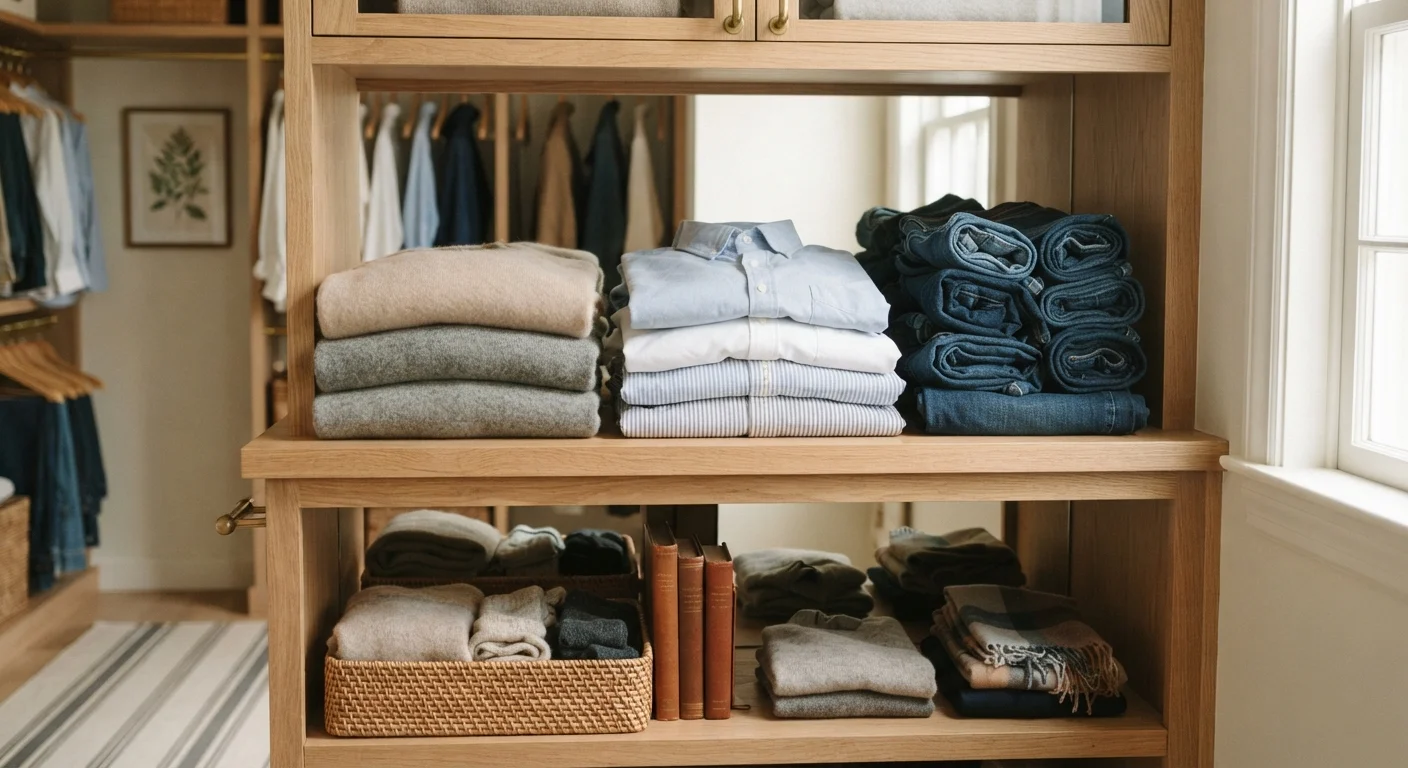
Why Fabric Care Is Worth Getting Right
Clothes wear out partly because of how they're made - and partly because of how they're treated after purchase. If you've ever pulled a formerly crisp shirt from the dryer to find it has shrunk a size, or watched a dark sweater fade to a dull grey after a few months of washing, you've seen the second category in action.
The good news is that most fabric damage is preventable. The practices that protect garments aren't complicated or time-consuming - they just require a small shift in default habits. And the payoff compounds over time: garments that stay in good condition longer mean fewer replacements, lower spending, and a wardrobe that actually holds its value.
If you're already thinking carefully about what you buy, the construction details that signal a garment will last are worth understanding alongside the care habits that protect them.
The Core Practices That Make the Biggest Difference
These aren't rules designed around edge cases - they're the habits that consistently extend garment life across fabric types, price points, and washing machines.
Read the care label before the first wash - every time, for every garment.
Care instructions are determined by the fabric composition and construction, not by how a garment looks. Washing a wool-blend sweater on a hot cycle or machine-drying a structured blazer can cause irreversible shrinkage, pilling, or distortion after a single cycle.
Wash clothes less often than you think you need to.
Every wash cycle creates mechanical friction that gradually breaks down fibers, fades dyes, and loosens construction. Most garments worn close to clean skin - outerwear, knitwear, jeans - can go multiple wears between washes without hygiene concerns.
Use cold or cool water for most loads and choose a gentle cycle for delicates.
Hot water accelerates dye bleeding, fiber relaxation, and shrinkage - especially in natural fibers like cotton, wool, and linen. Cool water cleans effectively for everyday soil levels and is easier on both the fabric and its color.
Air-dry structured garments and anything prone to shrinkage or distortion.
Tumble dryer heat is one of the leading causes of premature garment failure - it sets wrinkles into synthetics, shrinks natural fibers, degrades elastic waistbands, and weakens seam threads over time. Air-drying is gentler and costs nothing.
Fold knits and store hanging items on appropriate hangers.
Heavy knitwear stretched over a hanger develops shoulder bumps and loses its silhouette. Conversely, woven blazers and structured shirts stored folded in drawers develop creases that are difficult to press out. Matching storage method to fabric type keeps garments looking as intended.
Treat stains promptly and correctly before they set.
Most stains are far easier to remove when fresh. Heat - including dryer heat - sets protein-based stains like blood and sweat permanently. Acting quickly with cool water and appropriate treatment prevents a minor incident from becoming a permanent mark.
Care Labels Are Legally Standardized
In the U.S., the Federal Trade Commission requires manufacturers to attach permanent care labels listing fiber content and care instructions. These symbols follow a standardized system - a tub icon for washing, a triangle for bleaching, a square for drying. A quick online search for 'ASTM care symbol guide' gives you a reliable decoder for any label you encounter.
Quick Habits You Can Start Today
You don't need to overhaul your entire laundry routine overnight. A few targeted changes, applied consistently, produce most of the benefit. Start here:
For a broader look at the habits most likely to shorten garment life, the common laundering and storage mistakes article covers the flip side of these practices in detail.
Connecting Care to a Longer-Term Wardrobe Strategy
Good fabric care habits don't exist in isolation - they're part of a broader approach to building a wardrobe that actually works over time. When you invest in fewer, better pieces and maintain them properly, each garment earns its place through repeated use rather than being replaced after a season.
“The most sustainable garment is the one you already own. Taking care of what's in your closet is the most effective form of sustainable fashion available to any consumer.”
— Kate Fletcher, Researcher and author on sustainable fashion and textile systems
This connects directly to how you approach building and curating your closet. The core principles behind versatile dressing outline how to assemble clothing that mixes, matches, and adapts - and clothes that are well-maintained give you far more flexibility to do that. If alterations are part of your strategy for keeping pieces longer, it's worth knowing which alterations add real value and which don't justify the cost.
None of this requires a major investment of time or money - just the consistent application of a handful of well-chosen habits from the beginning.