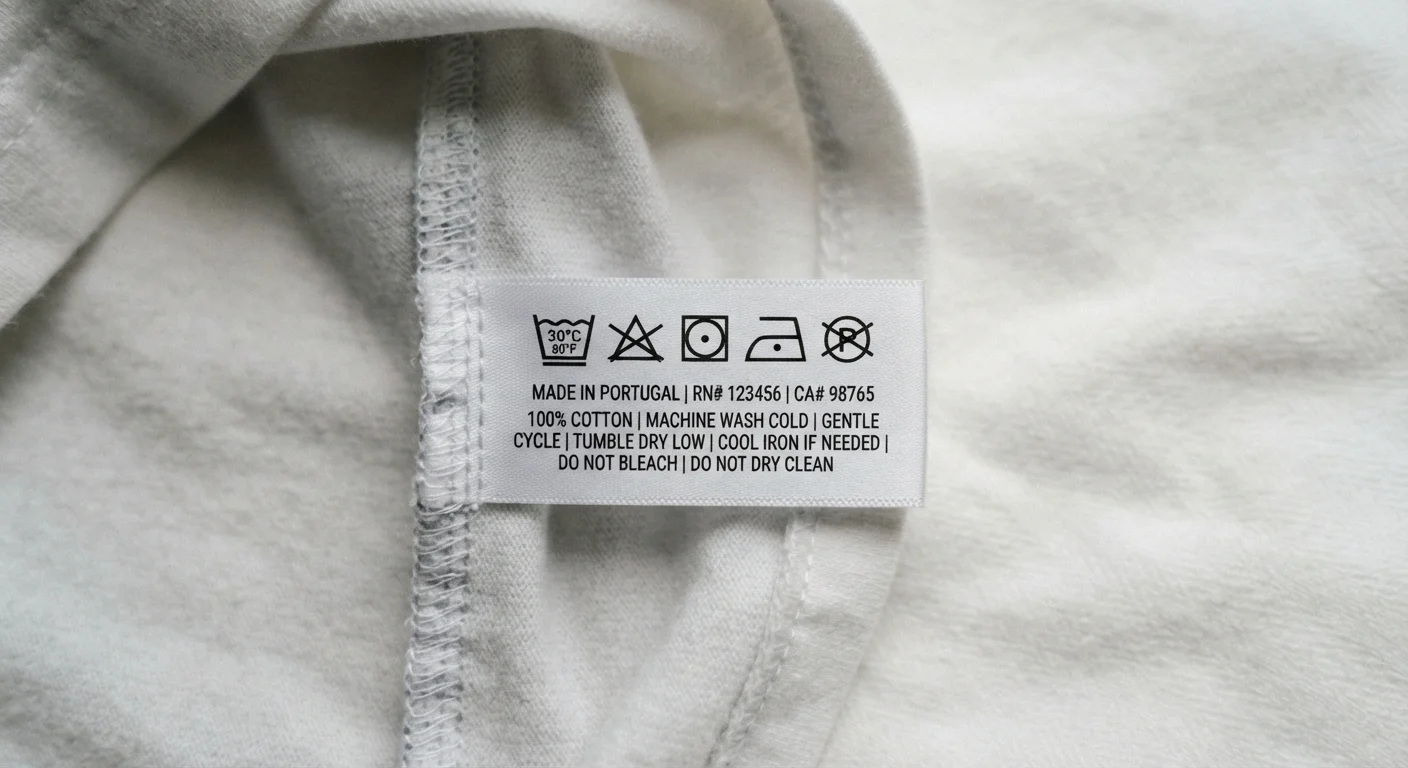
Why the Label Exists and What Law Requires
In the United States, the Federal Trade Commission (FTC) requires that most clothing sold domestically carry a permanent care label listing at least one safe cleaning method. The label must stay legible for the life of the garment. Manufacturers can use written instructions, standardized symbols, or both - which is why you'll sometimes see a tub icon next to the word "MACHINE WASH" and sometimes only one or the other.
Care instructions are set by the manufacturer based on the garment's fiber content, construction, and any applied finishes or dyes. Following them isn't just about cleanliness - it's about preserving the structure, color, and fit of the item. Ignoring a label is one of the most common reasons clothes wear out earlier than they should. If you want to understand the full picture, see why clothes wear out faster than they should.
| U.S. regulatory body | Federal Trade Commission (FTC) (FTC Care Labeling Rule, 16 CFR Part 423) |
| Symbol standard (U.S.) | ASTM D5489 (ASTM International) |
| Symbol standard (international) | ISO 3758 (International Organization for Standardization) |
| Number of base symbol categories | 5 (wash, bleach, dry, iron, professional care) |
| Temperature units on labels | Celsius (°C) (Standard across ASTM and ISO systems) |
| Label permanence requirement | Must remain legible for the garment's useful life (FTC Care Labeling Rule) |
The Five Symbol Categories Explained
International care symbols follow the ASTM D5489 standard in the U.S. and the ISO 3758 standard globally. Both use the same five base icons:
1. Washing (Tub Symbol)
A plain tub means machine wash is safe. A hand dipping into the tub means hand wash only. A tub with an X through it means do not wash with water at all. Numbers inside the tub (30, 40, 60, etc.) indicate the maximum water temperature in Celsius. One or two lines under the tub indicate a gentle or permanent-press cycle, respectively.
2. Bleaching (Triangle)
An open triangle means any bleach is permitted. A triangle with two diagonal lines means only non-chlorine (oxygen) bleach. A filled or crossed-out triangle means no bleach whatsoever - important for dark colors and delicate fabrics.
3. Drying (Square)
A square with a circle inside represents a tumble dryer. One dot inside the circle = low heat; two dots = medium; three dots = high. A line under the square indicates a gentler cycle. A square without a circle, with lines inside, represents line drying, flat drying, or drip drying - the specific line configuration distinguishes them.
4. Ironing (Iron Shape)
The iron symbol with one dot means low heat (synthetics); two dots, medium (wool); three dots, high (cotton and linen). An iron with lines crossing the soleplate means do not steam. A crossed-out iron means ironing is not safe for this item.
5. Professional Textile Care / Dry Cleaning (Circle)
A plain circle means dry clean. Letters inside - P, F, or W - tell the dry cleaner which solvent is safe. An X through the circle means do not dry clean. These letters matter most to the professional, but knowing them helps you communicate accurately when dropping off a garment.
ASTM D5489
The U.S. standard published by ASTM International that defines care symbols used on textile labels. It aligns closely with the international ISO 3758 standard.
Permanent press cycle
A washer or dryer setting that uses medium heat and a cool-down period to reduce wrinkling in synthetic and blended fabrics. Indicated by two lines under the tub or square symbol.
Non-chlorine bleach
Oxygen-based bleach (often labeled "color-safe bleach") that is less aggressive than chlorine bleach and safer for dyed or delicate fabrics. Indicated by a triangle with two diagonal lines.
Dry cleaning solvent codes
Letters inside the dry-clean circle (P, F, W) that specify which professional cleaning solvent is safe for the garment. P = perchloroethylene or other solvents; F = petroleum-based; W = wet cleaning.
Flat drying
Laying a garment horizontally on a clean surface to dry, preventing stretching from gravity. Typically required for knitwear and loosely woven fabrics.
FTC Care Label Rule
A U.S. Federal Trade Commission regulation requiring most clothing manufacturers to attach permanent, legible care instructions to garments sold in the United States.
Putting It Into Practice
Most everyday garments - basic cotton tees, denim, polyester blends - can tolerate a cold machine wash and low-heat or air dry without issue. The label becomes critical when you're dealing with structured items (blazers, trousers with a pressed crease), natural fibers prone to shrinkage (wool, linen, silk), or garments with embellishments like beading or screen prints.
A practical habit: check the care label before you buy, not after. If the label says "dry clean only" and you're not willing to pay for regular professional cleaning, factor that into your purchase decision. Our pre-purchase checklist includes care requirements as one of the key things to evaluate.
Care labels also indirectly signal garment quality. An item that requires minimal intervention - cold wash, air dry - is often built from more stable construction. What "quality" in clothing actually refers to explains the construction details that support this.
Once you understand what each symbol means, translating that into consistent habit is the next step. Fabric care habits worth building from the start covers laundering and storage practices that extend garment life over time.
When Labels Conflict or Are Missing
Imported garments sometimes carry two labels - one for the country of origin and one translated for the U.S. market. If the instructions differ, default to the more conservative option (lower heat, gentler cycle). If a care label is missing entirely from a secondhand or vintage item, identify the fiber content by feel or a burn test, then research care requirements for that fiber type. When in doubt, cold water and air drying are rarely wrong.