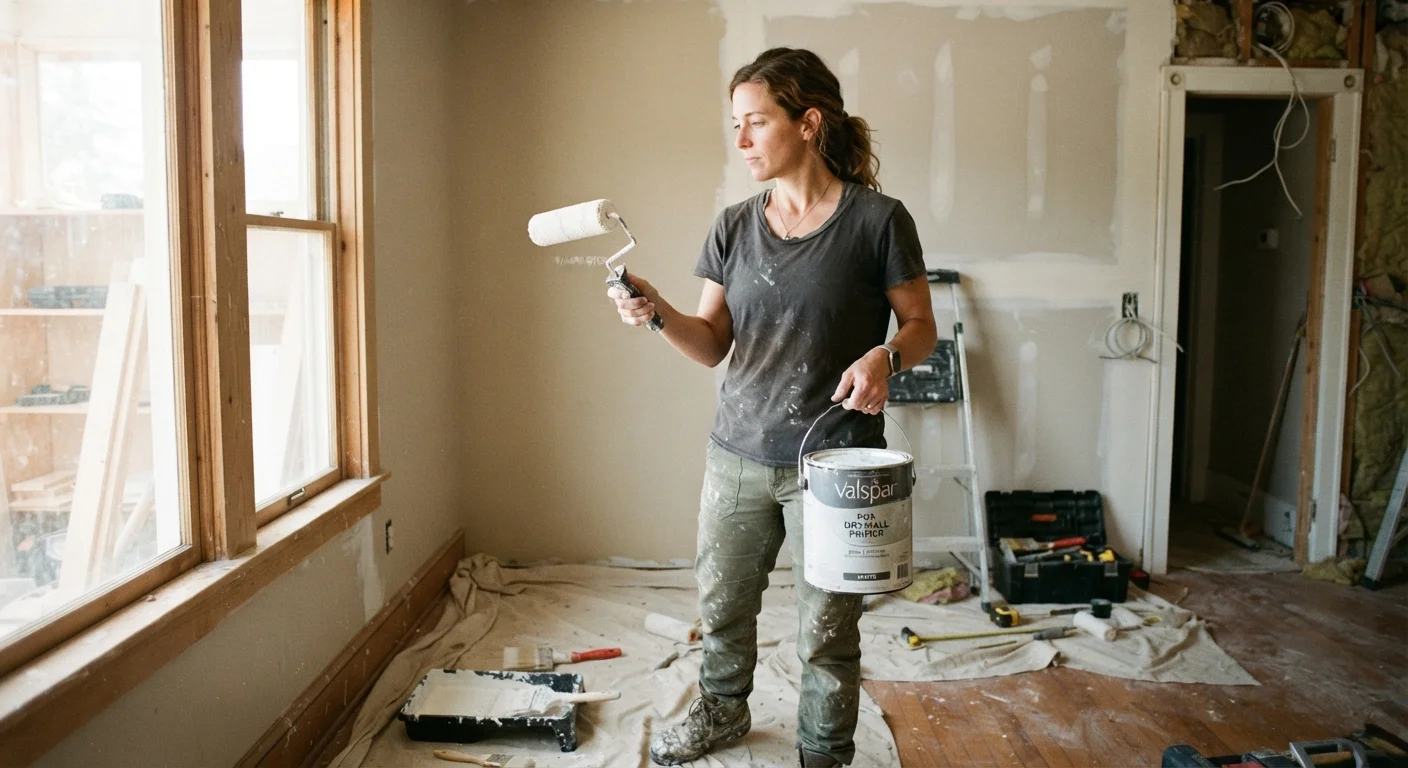
Why Home Improvement Myths Persist
Home improvement advice travels fast - through neighbors, online forums, and passed-down habits. The problem is that a lot of it is simply wrong, and the consequences show up later as failed finishes, wasted materials, or expensive remediation work. This article addresses some of the most damaging misconceptions so you can work smarter from the start.
Renovation costs have a way of surprising homeowners who didn't plan for the unexpected. For a fuller picture of what can derail a project budget, see The Hidden Costs That Blindside Homeowners Mid-Renovation.
Myth
You can skip primer if you're using a paint labeled 'paint and primer in one.'
Fact
Paint-and-primer combo products reduce but rarely eliminate the need for a dedicated primer coat, especially on new drywall, stained surfaces, or dramatic color changes.
Dedicated primer seals porous surfaces, blocks stains, and creates uniform adhesion - tasks a combo product handles only partially. On bare drywall or after patching, skipping true primer typically results in uneven sheen, visible lap marks, and finish coats that peel prematurely. The cost of a quart of primer is minimal compared to the labor of repainting a room.
Myth
All caulks are interchangeable - just grab whatever's on the shelf.
Fact
Caulk formulations are engineered for specific surfaces and conditions; using the wrong type leads to cracking, mold, or complete adhesion failure within months.
Silicone caulk excels in wet areas like showers and around tubs because it resists moisture and mold. Paintable latex caulk is better suited for interior trim and baseboards. Exterior caulks are formulated to flex through temperature swings. A mismatch - say, using interior latex around a bathtub - can mean redoing the job entirely within a single season, plus potential water damage behind the tile.
Myth
Small renovation jobs don't need a permit.
Fact
Many seemingly minor projects - adding an outlet, replacing a water heater, or finishing a basement - require permits in most U.S. jurisdictions.
Unpermitted work creates a paper trail problem. When you sell your home, unpermitted improvements may need to be disclosed, retroactively permitted, or even removed. Insurance claims related to unpermitted work can be denied. The permit process exists to ensure work meets safety codes - skipping it doesn't just risk a fine, it can create genuine structural or fire hazards. Always check with your local building department before starting any project involving electrical, plumbing, structural changes, or HVAC.
Myth
The most expensive paint will always give the best result.
Fact
Surface preparation - cleaning, patching, sanding, and priming - has a far greater impact on finish quality than the price of the paint.
Premium paints do offer real benefits: better pigment coverage, improved durability, and easier application. But applied over a poorly prepped surface, they'll look just as bad as a cheaper option. Cracks, grease, and dust left on walls show through any paint. Investing time in proper prep before applying a mid-range product almost always outperforms slapping expensive paint over a dirty, unprimed wall.
Myth
You can do your own electrical work and it's always fine to skip an electrician.
Fact
Many electrical tasks - panel work, new circuits, and anything involving the service entrance - are regulated and legally require a licensed electrician and permit in most states.
Simple tasks like replacing a switch or outlet are legal DIY work in many places, though even these often require a permit. More complex work - adding circuits, upgrading panels, or working near the main service - carries serious shock and fire risk and is regulated in virtually every U.S. jurisdiction. Doing this work without a permit can void your homeowner's insurance and create liability if something goes wrong. When in doubt, call a licensed electrician and verify what your local code requires.
Permits, Paint, and Other Costly Assumptions
Two areas where myths cause the most damage are surface preparation and permit requirements. Homeowners who skip primer or pull the wrong caulk off the shelf lose time and money on fixes. Those who skip permits risk far larger consequences - from insurance claim denials to required demolition of finished work.
Never Skip the Permit on Structural or Electrical Work
Even if a contractor offers to do the job without pulling a permit to save you money, this is a red flag. Unpermitted structural, electrical, or plumbing work can invalidate your homeowner's insurance coverage for related claims and create mandatory disclosure obligations when you sell. Always request that licensed work be permitted and inspected.
If you're tackling a painting project, surface prep and proper sequencing matter far more than the brand on the can. Our guide on DIY painting done right walks through the full process. And if you're patching walls before you paint, drywall repair techniques are worth reviewing first.
On the permits side, many homeowners don't realize what actually requires a permit in their jurisdiction. The rules vary by location and project type. Permits, Inspections, and Code: What Homeowners Actually Need to Know is a practical starting point for understanding the process before you commit to a project.
35%
Homeowners who've had unpermitted work issues
A survey by the National Association of Realtors found roughly a third of homeowners have encountered problems related to unpermitted improvements during a home sale.
2-3×
Cost multiplier for skipped surface prep
Painting contractors commonly report that fixing failed paint jobs - caused by skipped prep - costs two to three times more than doing the job correctly the first time.
This article is for general informational purposes only and does not constitute professional contracting, legal, or financial advice. Always verify local building codes and consult licensed professionals for hazardous or regulated work.