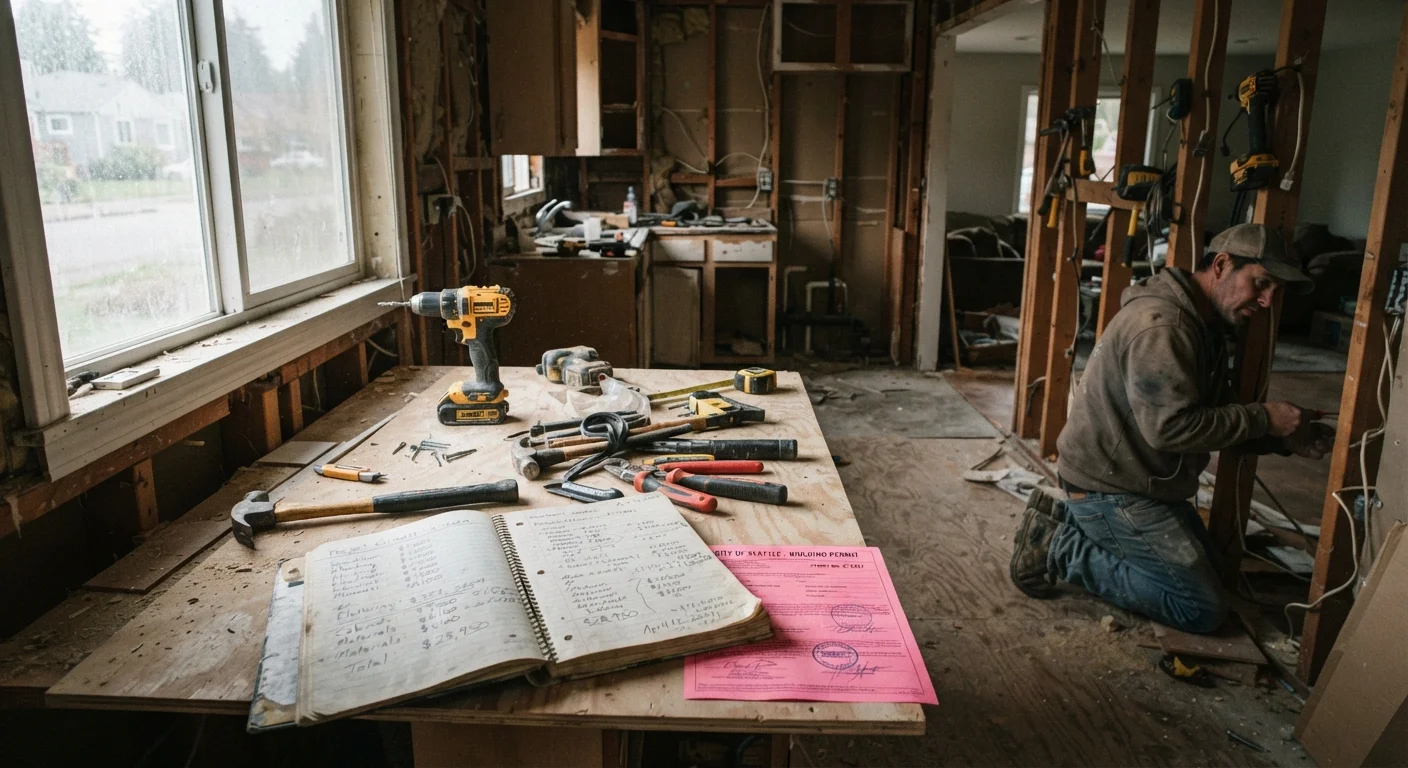
Why Renovation Budgets Break Down
A homeowner plans a kitchen remodel. They get three contractor bids, choose one, and set a firm budget. Six weeks in, the wall is open, there's a rotted subfloor, and the electrician is talking about bringing the panel up to current code. The project is now 30% over budget - and there's no going back.
This scenario plays out constantly. It's not a planning failure so much as a knowledge gap: most homeowners price what they can see, but renovations routinely surface what's been hidden for decades. Understanding the categories of cost that routinely blindside people is the first step toward building a budget that holds. These hidden costs aren't exotic - they're predictable. Which means you can prepare for them.
Common misconceptions about home improvement often cause homeowners to underestimate project complexity from the start. If you're mapping your full financial picture, it's also worth recognizing how irregular, unexpected expenses derail budgets across all areas of life - renovation is just one of the most intense examples.
Get Itemized, Not Just Total, Estimates
When comparing contractor bids, ask for a line-item breakdown rather than a single project total. This makes it far easier to spot what's included versus excluded - and to have an informed conversation about where contingency risk is highest. A detailed estimate also gives you a clearer starting point if scope needs to change mid-project.
The Costs That Catch Homeowners Off Guard
Permit Fees and Code-Compliance Upgrades
Pulling permits isn't optional on most structural, electrical, or plumbing work - it's legally required. But the permit fee itself is rarely the full story. When an inspector reviews open walls or a new system, they may require that adjacent work be brought up to current code. An older home getting a bathroom addition might trigger a panel upgrade, new GFCI requirements, or ventilation changes that weren't in the original scope.
These aren't contractor add-ons - they're regulatory requirements. Budget for permit fees upfront, and factor in a realistic allowance for code-triggered work, especially in homes built before 1990.
Permit fees are just the entry cost - code-compliance upgrades can far exceed them.
Structural Surprises Behind the Walls
Rot, mold, pest damage, inadequate framing - these issues hide behind drywall and under flooring until a renovation exposes them. Once a wall is open, you can't simply close it back up and ignore what you found. Addressing rot or compromised framing isn't optional; it's a safety issue that licensed contractors are generally obligated to report and remediate.
In older homes, this category also includes hazardous materials: asbestos in floor tiles or insulation, and lead paint in pre-1978 homes. Testing, remediation, and proper disposal carry their own costs and require licensed professionals in most states.
What's behind the drywall is often more expensive than what's in front of it.
Material Cost Fluctuations Between Quote and Build
Contractor estimates are snapshots in time. If lumber, tile, fixtures, or appliances are quoted during an estimate but purchased weeks or months later, prices may have shifted - sometimes significantly. Supply chain volatility, seasonal demand, and tariff changes have all contributed to notable material price swings in recent years.
Ask your contractor how quotes are structured: are materials priced at time of estimate or time of purchase? If it's the latter, build in margin. Locking in material costs early where possible - or at least understanding the risk - helps avoid sticker shock mid-project.
A quote is a snapshot; actual material costs depend on when they're purchased.
Temporary Living and Storage Costs
Major renovations - gut kitchens, full bathroom remodels, additions - can make parts of a home temporarily uninhabitable. Short-term rentals, extended hotel stays, and eating out every meal add up fast, yet these costs rarely appear in renovation budgets. Similarly, displaced furniture and belongings often require temporary storage, which carries monthly fees that extend whenever timelines slip.
Before signing a contract, ask your contractor for a realistic timeline and plan for it to run 20-30% longer than projected. Price out temporary housing options in your area in advance so you're not making rushed decisions mid-project.
Temporary housing and storage are real line items - budget them before the demo starts.
Finish and Fixture Scope Creep
It starts with upgrading a faucet. Then the cabinet hardware looks wrong next to the new faucet. Then the light fixture above doesn't match the hardware. Finish and fixture upgrades - individually reasonable decisions - compound into a meaningful budget overrun through a pattern often called scope creep.
The fix isn't to avoid decisions, it's to make them early and price them all out before demo begins. If you have a wishlist of upgrades, attach real numbers to each one and decide which are in-scope before the walls come down. Changing your mind after work has started is almost always more expensive than changing it in advance.
Small upgrade decisions compound quickly - price your wishlist before demo day.
Cleanup, Disposal, and Debris Removal
Renovation generates substantial waste: old cabinetry, flooring, drywall, fixtures, and packaging from new materials. Hauling and disposing of this debris carries real costs - dumpster rentals, dump fees, or contractor disposal charges. In some jurisdictions, certain materials (treated wood, old appliances, hazardous materials) require separate disposal and cannot go into standard dumpsters.
Clarify with your contractor what's included in their quote and what isn't. If debris removal falls to you, get disposal costs estimated before the project starts rather than scrambling to arrange it after a full demolition.
Debris removal and disposal fees are easy to overlook and hard to avoid.
When to Involve a Licensed Professional
Several of the cost categories in this list - hazardous material remediation, structural repairs, electrical panel upgrades - are not DIY territory. These tasks typically require licensed contractors and, in many jurisdictions, specific permits and inspections. Attempting them without proper credentials can void homeowner's insurance coverage and create liability issues at resale. Always verify local licensing and permit requirements before beginning any major renovation work.
Build a Buffer, Not Just a Budget
The through-line across every item on this list is the same: renovation costs are inherently uncertain, and budgets built without slack will break. A contingency reserve - typically 10-20% of the total project cost - isn't pessimism, it's basic project management. Fund it before you start, and treat it as off-limits except for genuine surprises.
Sound budgeting principles apply directly here: build flexibility into your plan rather than aiming for a perfect number. If your project involves structural work, plumbing, or electrical, review what permits and inspections are typically required in your jurisdiction before work begins - not after. And if you're tackling a bathroom specifically, the room-by-room renovation planning checklist is a practical pre-demo resource worth working through.
This article is for general informational purposes only. Project costs, permit requirements, and code standards vary significantly by location and project scope. Consult licensed contractors and your local building authority before beginning any renovation work.