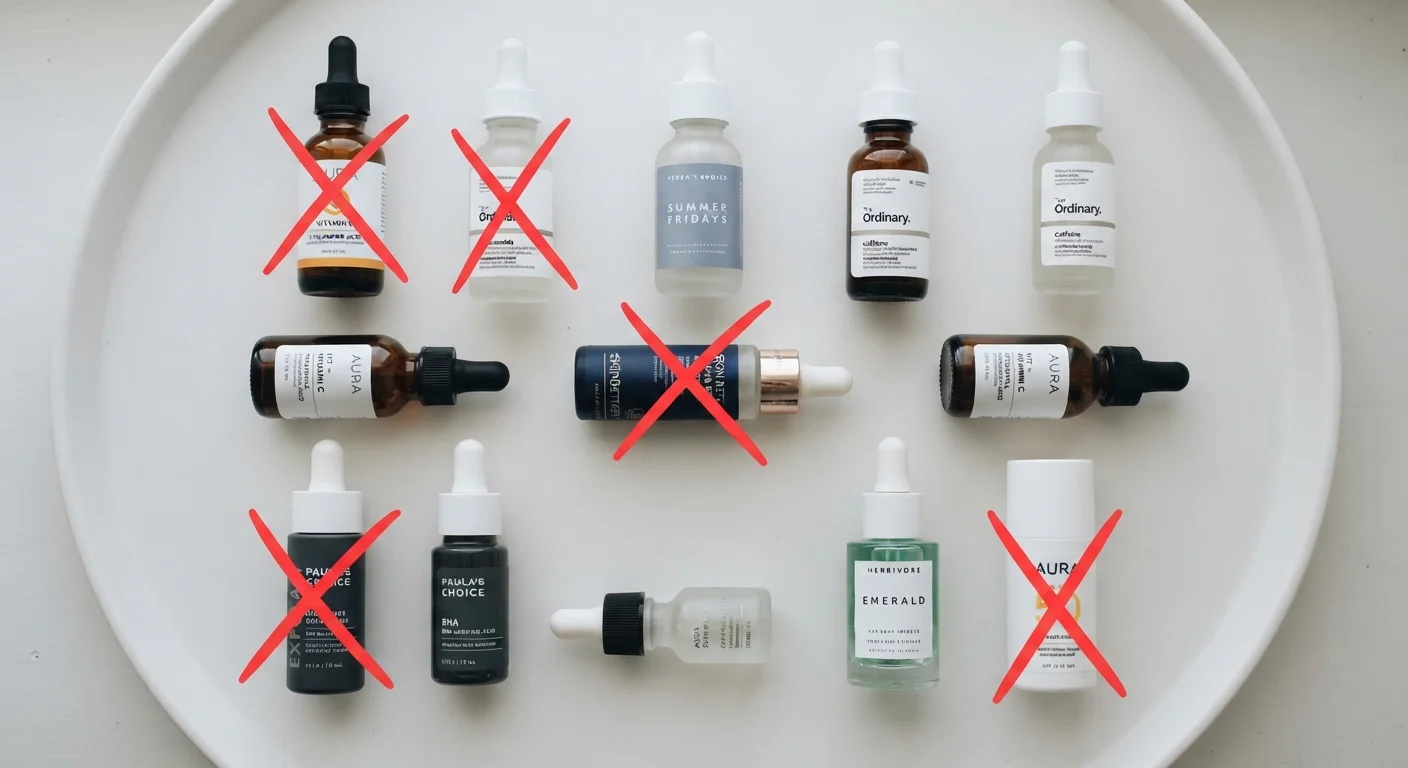
Why Active Ingredient Combinations Go Wrong
Skincare actives - ingredients like retinol, vitamin C, AHAs, and niacinamide - are called "active" for a reason: they're formulated to produce a specific biological or chemical effect on the skin. That also means they have specific conditions under which they work, and specific conditions under which they fail or cause harm.
The most common source of conflict is pH incompatibility. Vitamin C (in its most researched L-ascorbic acid form) requires a highly acidic environment - roughly pH 2.5 to 3.5 - to penetrate the skin effectively. Niacinamide works best closer to a neutral pH of 5 to 7. When you layer them back-to-back without allowing time for absorption, the higher-pH product can shift the environment before the acid has fully worked. To understand what's actually in your products, our guide Skincare Ingredient Labels, Decoded walks you through reading INCI lists and spotting active concentrations.
A second source of conflict is competition at the same cellular level - both retinol and exfoliating acids accelerate skin cell turnover through different pathways. Using them simultaneously doesn't double the benefit; it stacks the disruption. The skin barrier takes the hit.
Mixing Actives Can Damage Your Skin Barrier
Combining high-potency actives without understanding their interactions is one of the most common causes of a compromised skin barrier - resulting in redness, flaking, tightness, and increased sensitivity. A damaged barrier can take weeks to recover. When in doubt, introduce one new active at a time and monitor your skin's response before adding another.
The Specific Pairs to Separate - and How
The mistakes below reflect the most common layering errors consumers make when building routines. Each one stems from a logical-sounding assumption that breaks down under basic chemistry.
Layering retinol directly on top of AHAs or BHAs in the same routine.
Why it happens: Both retinol and exfoliating acids (like glycolic or salicylic acid) are marketed as anti-aging or clarifying powerhouses, so combining them feels like a logical upgrade. The problem is both increase cell turnover and sensitize skin simultaneously.
Applying vitamin C (L-ascorbic acid) alongside niacinamide, expecting both to work at full strength.
Why it happens: Vitamin C and niacinamide are both popular for brightening, so layering them seems additive. Older concerns about the pair forming nicotinic acid (which can cause flushing) have been largely updated by research, but pH conflict remains a real issue: L-ascorbic acid works best below pH 3.5, while niacinamide prefers a near-neutral pH.
Using benzoyl peroxide and retinol together, believing both will target breakouts more effectively.
Why it happens: Both are go-to ingredients for acne-prone skin, so the reasoning is intuitive. In practice, benzoyl peroxide can oxidize and degrade retinol molecules, making the retinol less effective - and the combination often causes significant dryness and redness.
Stacking multiple exfoliating acids (e.g., glycolic acid serum followed by a salicylic acid toner) in one session.
Why it happens: Readers often own products with different acid types and assume that because they're both 'gentle,' the combination is fine. Layering multiple acids in a single routine, even mild ones, dramatically raises the risk of over-exfoliation.
Applying a physical or chemical SPF immediately after an acid exfoliant without waiting for pH adjustment.
Why it happens: Many people apply products in rapid succession as part of a rushed morning routine. Acids need time to work at their low pH before the skin's surface is neutralized by a higher-pH SPF or moisturizer layered on top.
Knowing when to use each active matters as much as knowing which ones to avoid pairing. Our breakdown of morning vs. evening skincare routines explains why certain ingredients are better suited to AM or PM use - which directly informs how you schedule conflicting actives.
Building a Smarter Active Routine
The solution to incompatible actives isn't to abandon them - it's to sequence them intelligently. A few principles make this straightforward:
- Separate by time of day: Assign vitamin C and SPF to your morning routine; retinol and heavier acids to your evening routine.
- Alternate by day: If you use both AHAs and retinol, use one on Monday and Wednesday, the other on Tuesday and Thursday. Your skin gets both benefits without the compounded stress.
- Introduce one active at a time: Wait at least two to four weeks before adding another new active. This makes it easy to identify what's causing a reaction if one occurs.
~3.5-4.0
Optimal pH for AHA/BHA exfoliants
Most exfoliating acids require a low pH environment to activate; layering them with higher-pH formulas reduces their efficacy, per published cosmetic chemistry literature.
6-8 weeks
Typical retinol adjustment period
Dermatologists generally note that skin takes six to eight weeks to acclimate to retinoids, making early over-layering especially likely to cause irritation.
For those with reactive or easily sensitized skin, the bar for caution is higher. Our guide to building a routine for sensitive skin covers patch testing, formulation flags, and a slower, safer introduction schedule. And for the full logic of layering order - not just which actives to separate but how every step flows - see our step-by-step skincare layering guide.
This Is Skincare Education, Not Medical Advice
The information here covers general skincare chemistry and routine guidance for educational purposes. If you're experiencing persistent skin irritation, breakouts, or reactions, consult a board-certified dermatologist. This content is not a substitute for professional evaluation or treatment.
This article is for general informational and educational purposes only and is not a substitute for professional medical or dermatological advice. Consult a qualified healthcare provider for concerns about your skin.