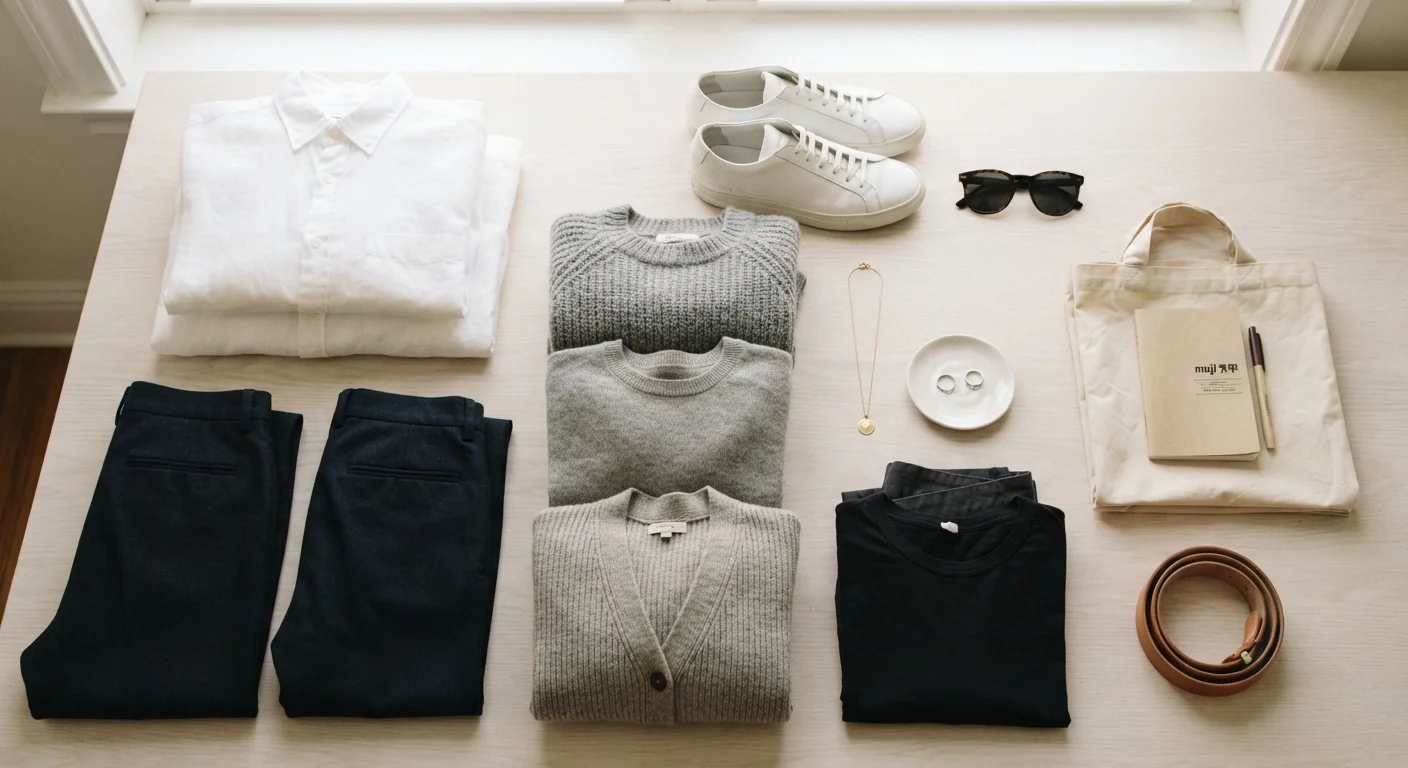
Why Most Wardrobes Underperform
A closet full of clothes with nothing to wear is a real phenomenon, and it has a clear cause: most wardrobes grow by impulse rather than intention. Pieces get added for individual reasons - a sale, a trend, a single event - without regard for how they work together. The result is a collection that looks large but functions poorly.
Versatile dressing isn't about owning fewer things for its own sake, nor is it about following rigid capsule rules. It's about understanding why certain combinations work and applying that logic when you shop, when you get dressed, and when you decide what to keep. This guide lays out the core principles behind wardrobes that actually function.
Before diving in, it helps to check which common assumptions might be steering you wrong. Many widely repeated style rules don't hold up - and correcting them early saves real money.
~80%
Clothes worn rarely or never
Consumer research consistently finds that most people wear a small fraction of what they own on a regular basis, suggesting wardrobe size and wardrobe function are not the same thing.
3x
Outfit combinations unlocked per neutral piece
Wardrobe planning frameworks generally estimate that a single neutral item in a coordinated wardrobe can generate significantly more combination options than a trend-driven statement piece.
The Foundation: Fit and Fabric First
No color strategy or styling trick compensates for a garment that fits poorly. Fit is the single variable with the largest visual impact, and it costs nothing to prioritize at the point of purchase. A well-fitting basic outperforms an expensive statement piece in the wrong size every time.
Fabric determines how a garment behaves over time: how it drapes, how it breathes, how it holds its shape after washing, and how long it lasts. Natural fibers like cotton, wool, and linen generally breathe better and respond better to alterations and repairs. Synthetics vary widely - some perform excellently for specific uses (moisture management, stretch) while others pill quickly or trap odor.
When evaluating fit in a store or at home, move through your actual range of motion - sit down, reach forward, raise your arms. A garment that restricts movement or distorts significantly with normal activity will be avoided in daily wear.
Clothes that are uncomfortable to move in get worn less often, regardless of how they look stationary. Real-world wearability is a better fit test than a mirror alone.
Check fabric composition on the label before you check the price tag. A higher percentage of natural fiber in a budget garment often signals better longevity than a synthetic-heavy piece at a premium price.
Fabric content is disclosed on the label by law and is one of the most objective, comparable data points available at point of purchase - yet most shoppers skip it entirely.
Neither fit nor fabric is about spending more money. A well-cut garment in an affordable fabric will outperform a poorly cut one in expensive material. The habit to build is evaluation before purchase, not spending up a price tier. See our pre-purchase checklist for a practical framework to apply at the point of decision.
Building Around a Color Logic
The most functional wardrobes share a color structure: a neutral base that everything connects to, plus a small number of accent colors introduced deliberately. Neutrals - navy, grey, white, black, camel, olive - mix with each other and with most accent colors without conflict. When the majority of your wardrobe operates in this range, outfit assembly becomes reliable rather than experimental.
This doesn't mean every piece must be muted. It means knowing which colors in your wardrobe connect. A burgundy sweater that works with navy trousers, grey denim, and a camel coat is three times as useful as one that only pairs with a single item you already own. Understanding color relationships takes the guesswork out of this process entirely.
Pattern and texture add visual interest without introducing new color problems - provided you understand how they interact. Visual elements in fabric can clash or complement in ways that aren't always obvious until you know what to look for.
Start with your most-worn neutrals
Before adding anything new, identify the two or three neutral pieces you already reach for most often. Those are your wardrobe anchors. New additions should connect to those anchors first - that's the fastest way to increase functional combinations without spending more.
Occasion Range: Dressing Up and Down the Same Pieces
A wardrobe with strong occasion range lets individual garments serve more than one context. A well-fitted chino works in a casual weekend setting and, paired differently, in a business-casual environment. A structured knit can layer under a blazer or stand alone. This flexibility reduces the need to maintain entirely separate wardrobes for different areas of life.
The key is understanding what makes an outfit read as formal or casual - it's rarely one garment in isolation, but the combination of silhouette, fabric weight, footwear, and context. Dress codes have specific expectations that, once understood, make it easier to adapt what you already own rather than buying purpose-specific pieces for every occasion.
“The goal of getting dressed shouldn't be to look like you tried hard - it should be to look like you always dress this way, without effort. That consistency comes from a system, not from individual great outfits.”
— Tim Gunn, Fashion educator and author on style fundamentals
Adding Pieces Intentionally, Not Impulsively
The most common wardrobe mistake is adding without auditing. Before any new purchase, the useful question is: what does this connect to? A piece that pairs with at least three existing items earns its place. One that requires new purchases to function creates a spiral of spending rather than solving anything.
Both minimal and fuller wardrobes can work - the deciding factor is whether additions are made with intention. Secondhand and new clothing each have real trade-offs worth understanding; how buying secondhand affects fit, fabric condition, and care history is worth knowing before you commit either direction.
If wardrobe spending is a pressure point, building a clothing budget into your monthly plan is a practical way to make intentional purchases sustainable over time.
The Cost-Per-Wear Principle Has Limits
Cost-per-wear - dividing a garment's price by how many times you'll wear it - is a useful framing tool, but it can justify overspending if applied carelessly. A $200 item worn 100 times is economical; a $200 item worn 10 times is not. Be honest about your actual lifestyle and habits, not an idealized version of them, when estimating how often you'll realistically reach for something.
Maintaining What You Have
Garment care is the most underrated part of wardrobe building. Proper laundering, correct drying methods, appropriate storage, and timely repairs directly extend how long clothing looks and performs. A piece that's well-maintained at a moderate price point will outlast a neglected expensive one.
Most garment damage - pilling, shrinkage, color loss, fabric breakdown - is caused by avoidable laundering errors: washing at the wrong temperature, over-drying, or using harsh detergent formulations on delicate fibers. Reading care labels isn't a minor habit; it's how you protect the pieces you've already paid for. Proven care practices for every fabric type are worth establishing early, before damage occurs.